Grand Valley School District Strikes the Right Chord
School officials still singing the praises of premium rubber flooring
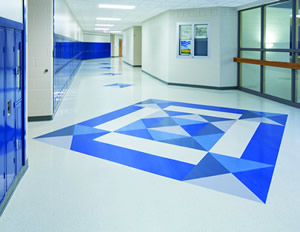 When Grand Valley Local School District in Orwell, OH, initiated plans for the consolidation of several schools into a single K-12 facility more than a decade ago, one of the key areas of concern was a music classroom that doubled as a band room.
And for good reason. The area was busy both during and after school hours. The marching band was able to exit the room through exterior doors, tracking sleet, water, gravel, grass and mud back into the building when they returned.
In fact, Paul Byler, the district’s director of operations, buildings and grounds, says the room has “probably the most abused floor in the entire building.”
To address their durability concerns, the school district chose to use noraplan® eco and norament® grano throughout the 244,000-square-foot, multifaceted building. And the decision has been a sound one.
“They look as new today as they did when they were installed,” says District Superintendent William Nye. “I get that comment all the time. ‘Your facility looks great; your floors are awesome.’ That’s one of the first things people look at—the floors. Ours sparkle every time.”
The floor offers a host of other benefits as well, school officials said, including sound attenuation and much simpler maintenance.
Despite the dirt and grime that enters the room on a daily basis, “This floor clears up very well,” says Tim Carlson, Grand Valley’s band director. “It doesn’t even look like it’s ever seen anything like that.”
And the maintenance regimen is a huge benefit. Deann Wendell, elementary custodian, says, “nora® flooring has made it easier for us to maintain the floors. We use plain water to clean them, so we’re not into the chemicals, which makes us healthier. The floors always have a nice shine without waxing them.”
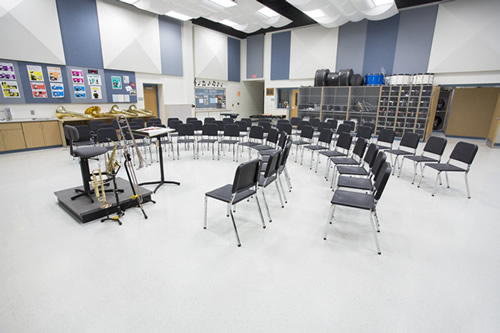
The cleaner air is important to the music program as well. “The kids are able to breathe deeply while they play their instruments,” Carlson says. “It all adds up to a much richer experience.”
Superintendent Nye gives the cleaner air credit for improving the school’s attendance record.
“I know this environment is way more conducive to optimum air quality than the older school,” he said. “I’m sure there’s some data out there that show it would increase attendance. A clean environment is always key to a good school system, good classrooms and a good, quality education.”
The school found that the right floor covering helps create an atmosphere that enhances the educational process.
Sponsored by: nora