Move-In Begins at CU Boulder Student Success Center

Move-in has started at the new Center for Academic Success and Engagement (CASE Building) at the University of Colorado Boulder (CU). Construction crews are wrapping up the final phases of work on the building as the CU Office Of Admissions begins using it as a home base for summer campus tours.
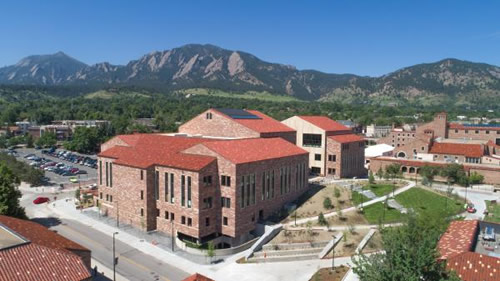
CU Boulder CASE Building

Along with the Office of Admissions, the University Exploration and Advising Center and Office of Veteran and Military Affairs are housed in the CASE Building. The facility also features meeting spaces, a testing center, and flex space for CU to use as other campus buildings are renovated in the coming years.

Featured

  • Year-Round Schools Require Year-Round Indoor Air Quality Planning

    While many schools are out for the summer, year-round schools follow a more “balanced” schedule with shorter, more frequent breaks spaced throughout the school year. Even though this offers educational benefits, these facilities have less downtime for building maintenance. This can become an issue when facilities managers overlook the importance of routine HVAC maintenance and air duct cleaning services.

  • GeoCam and UCLA: Modernizing Campus Accessibility Mapping

    In early 2025, UCLA partnered with GeoCam to capture and modernize its pedestrian infrastructure data. The goal was ambitious but clear: to produce a high-accuracy, imagery-backed digital map of every sidewalk, pathway, ramp, and ADA-related feature on UCLA’s 419-acre campus.

  • ZeroEyes, Academic Innovators Partner to Provide Safety Solutions

    ZeroEyes, which produces a multi-analytics weapons detection and threat intelligence platform, recently announced a partnership with Academic Innovators, according to a news release.

  • Q&A: How to Prevent Kitchen Grease Fires in Commercial Kitchens

    School cafeterias and university dining halls serve thousands of meals daily, relying on high-heat equipment like fryers, grills, and ovens. While these operations keep students fed, they also generate significant grease-laden vapors. Without proper controls, this grease becomes a silent fire threat. As a certified exhaust cleaning specialist and business coach who has helped hundreds of institutional facilities achieve NFPA 96 compliance, I emphasize that proactive grease management isn’t optional; it’s a core fire/life safety practice.