Kansas City Art Institute Breaks Ground on Paul and Linda DeBruce Hall

KANSAS CITY, MO – The Kansas City Art Institute (KCAI) broke ground in April on an 18,000-square-foot, $30-million building, the Paul and Linda DeBruce Hall. Designed specifically for art history, creative writing, entrepreneurial studies, liberal arts, and student services, Paul and Linda DeBruce Hall will impact every student at the college and will elevate the profile of KCAI’s academic programs in a state-of-the-art facility.
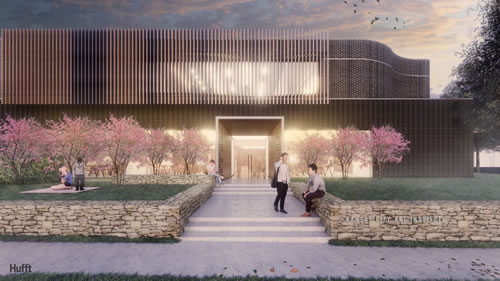
Kansas City Art Institute

A unique architectural feature of the Hall will be the entry portal. Visitors will enter through a portal adorned with panels, each engraved with the name of influential art historians of the past and present. The entrance will become a tribute to the individuals who have interpreted and written about art and artists for future generations.

The Hall is designed by Kansas City-based architecture firm Hufft. Award-winning landscape architects Hoerr Schaudt will design the expansive outdoor spaces and Kansas City construction company McCownGordon will build the facility.

Construction is expected to finish in August 2020.

Featured

  • UT-San Antonio Begins Residence Hall Renovations

    The University of Texas at San Antonio recently began a $6-million renovation project to one of its residence halls, according to a news release. Originally completed in 1986, Chisolm Hall measures in at 120,860 square feet and is the oldest and largest residence hall on campus.

  • University of Oklahoma Announces New Campus Master Plan

    The University of Oklahoma in Norman, Okla., recently announced that it will soon launch a new, comprehensive Campus Master Plan to guide the campus’ physical development during the next decade, according to a news release.

  • Children walking along bright school corridor with motion blur

    How Next-Gen Design Is Reshaping the Student Experience

    The environments where students learn play a crucial role in shaping their growth in and out of the classroom. By centering design on well-being, flexibility, and purpose, districts can ensure their facilities remain vibrant community assets for many years to come.

  • Doerr School of Sustainability Accelerator

    From Concrete Warehouse to Innovation Hub: Accelerating Sustainability at Stanford

    The transformation of a once windowless, concrete publishing warehouse into a sun-drenched center for global innovation began with a single, fundamental challenge: how to turn an industrial storage shell into a space built for human connection.