New Dental Clinic Opens at Case Western Reserve University

CLEVELAND, OH – The Case Western Reserve University School of Dental Medicine and Cleveland Clinic opened their new, larger dental clinic on campus here earlier this month. More easily accessed by patients, it will expand opportunities for education and research, enhance the patient experience, and support the health and well being of Cleveland-area residents.
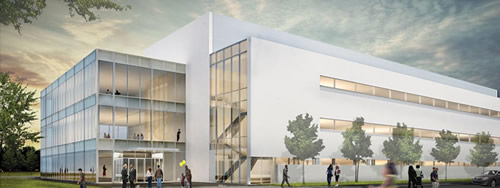
Case Western Dental Clinic

The three-story, 132,000-square-foot facility is the second building of the Health Education Campus (HEC), a joint effort between Case Western Reserve and Cleveland Clinic designed to promote collaborative practice and lifelong learning among health care professionals. It is located directly across from the HEC centerpiece, the Sheila and Eric Samson Pavilion; dedicated in April, the Samson Pavilion serves the more than 2,200 students in the university’s nursing, dental, and medical schools, with students from the social work school joining them for some classes as well.

The dental clinic was designed by DLR Group│Westlake Reed Leskosky of Cleveland. Kahler Slater of Milwaukee provided programming, planning, and interior architectural services.

The clinic includes procedure spaces for general and specialty dentistry and dental surgery, support labs, clinical research environments, 3D computer-aided design and manufacturing (CAD/CAM) lab equipment, imaging equipment, and central sterilization. Clinical spaces are designed to allow flexibility while maintaining patient confidentiality and privacy. Natural light is filtered throughout the building, further enhancing the patient experience.

Featured

  • TCU Marks Campus Expansion Milestone

    Texas Christian University in Fort Worth, Texas, recently held a topping-out ceremony to mark progress on a major campus expansion effort including four new residential facilities and a five-story parking garage, according to a news release.

  • Rethinking K-12 Schools as a Continuous Learning Experience

    Most students move through three or more separate facilities during their K-12 journey, yet the built environments they encounter at each stage have traditionally been designed in isolation, with little continuity in spatial language, learning philosophy, or physical resources. Each new school is a reset with different layouts, learning models, expectations, and ways of moving through a building. The next generation of school design is making the case that the first day of kindergarten and the last day of high school can and should feel connected through common support systems and infrastructure in the physical environment.

  • Q&A: How to Prevent Kitchen Grease Fires in Commercial Kitchens

    School cafeterias and university dining halls serve thousands of meals daily, relying on high-heat equipment like fryers, grills, and ovens. While these operations keep students fed, they also generate significant grease-laden vapors. Without proper controls, this grease becomes a silent fire threat. As a certified exhaust cleaning specialist and business coach who has helped hundreds of institutional facilities achieve NFPA 96 compliance, I emphasize that proactive grease management isn’t optional; it’s a core fire/life safety practice.

  • Designing Third Spaces That Do What AI Can't

    In 2026, education is evolving faster than ever. With AI reshaping everything from lesson planning to personalized instruction, schools and universities are turning their attention to what AI can’t replicate: spaces that foster collaboration, community, and creativity.