Computer & Automotive Engineering Building Underway at Weber State University

OGDEN, UT – The new Computer & Automotive Engineering Building on the campus of Weber State University is underway. The 50,000-square-foot building will help the College of Engineering, Applied Science & Technology (EAST) accommodate growth.
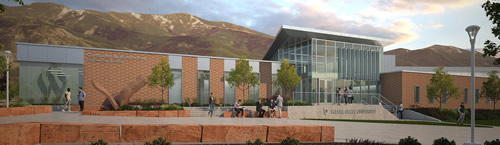
Weber State University Engineering Building

For the past five years, Weber State has led state institutions in awarding engineering and computer science degrees. In addition to providing a location for computer science and software engineering courses, the building will be the new home of the automotive technology program.

GSBS Architects designed the building and R&O Construction has been awarded the contract. Construction is expected to be complete in summer 2020.

Featured

  • Fayetteville State University Opens New Residence Hall

    Fayetteville State University (FSU) in Fayetteville, N.C., recently completed construction on a new $50-million residence hall, according to a news release. The university partnered with KWK/Jenkins • Peer Architects on the design of Bronco Pride Hall.

  • University of Southern Mississippi Starts Construction on Oyster Hatchery

    The University of Southern Mississippi (USM) recently announced that construction has begun on a new oyster hatchery at its Gulf Coast Research Laboratory (GCRL) Thad Cochran Marine Aquaculture Center (TCMAC) Cedar Point campus in Ocean Springs, Miss., according to a news release.

  • North Texas School District Completes Third New Elementary School

    The Denton Independent School District in Dallas, Texas, recently finished construction on its third prototype design elementary school, Reeves Elementary, according to a news release.

  • Image credit: O

    Strategic Campus Assessment: Moving Beyond Reactive Maintenance in Educational Facilities

    While campuses may appear stable on the surface, building systems naturally evolve over time, and proactive assessment can identify developing issues before they become expensive emergencies. The question isn't whether aging educational facilities need attention. It's how institutions can transition from costly reactive maintenance to strategic asset management in a way that protects both budgets and communities.

Digital Edition