Wisconsin’s New Berlin First Participant in Solar Now Pilot
- By Dian Schaffhauser
- 07/24/19
Wisconsin’s School District of New Berlin is outfitting three of its schools this summer with solar panels. The project, with WE Energies and SunVest Solar, will install 8,076 panels at three schools this summer. The installations will primarily go on rooftops, but one school will also have a solar field with 2,134 modules. The installation, part of WE's new "Solar Now" program, will create 35 megawatts of renewable energy.
The system includes access to SolarEdge, which provides online monitoring of energy production and usage data.
Solar Now is a pilot program approved by the state's Public Service Commission. In discussion before the vote, solar advocates told commissioners that the program gives WE Energies a monopoly on solar implementations within the state. The program works like this: The company installs solar panels on customer properties, and the customer receives a monthly lease payment based in part on how much power the panels generate. According to regional reporting, this "rent-a-roof" model prevents customers from being able "to lease or finance equipment through private developers," which cuts those companies out of the business.
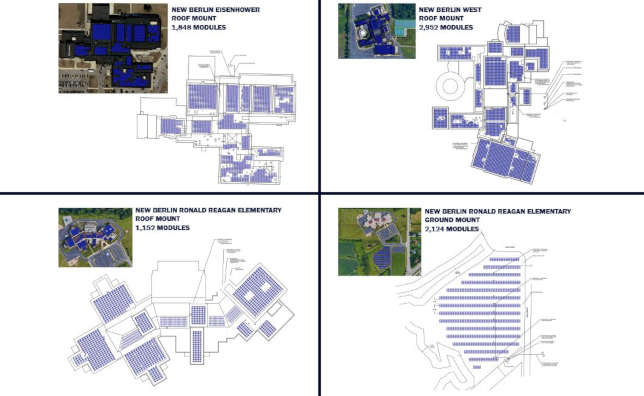
Image source: WE Energies
In a presentation to the school district, WE estimated the rent payments for the four solar installations at $94,401 per year, totaling $1.89 million for the 20 years of the agreement. In the arrangement, the school district would be responsible for the cost of temporarily relocating the solar array if the various school roofs were to need replacement.
"We are proud to be the first participant in this innovative renewable energy program," said Superintendent Joe Garza, during the project announcement. He noted that along with adoption of renewable energy, the initiative will also give students "the unique opportunity to gain real life knowledge about the production of solar energy for years to come."
About the Author
Dian Schaffhauser is a former senior contributing editor for 1105 Media's education publications THE Journal, Campus Technology and Spaces4Learning.