Smoking Detection Company Offers Product that Monitors for Tobacco, Marijuana Smoking

FreshAir, a smoking detection company, announced a new product that detects tobacco and marijuana smoking. The FreshAir1 Smoking Detection System is capable of monitoring up to 500 square feet and is suited for educational facilities to enforce no-smoking policies.
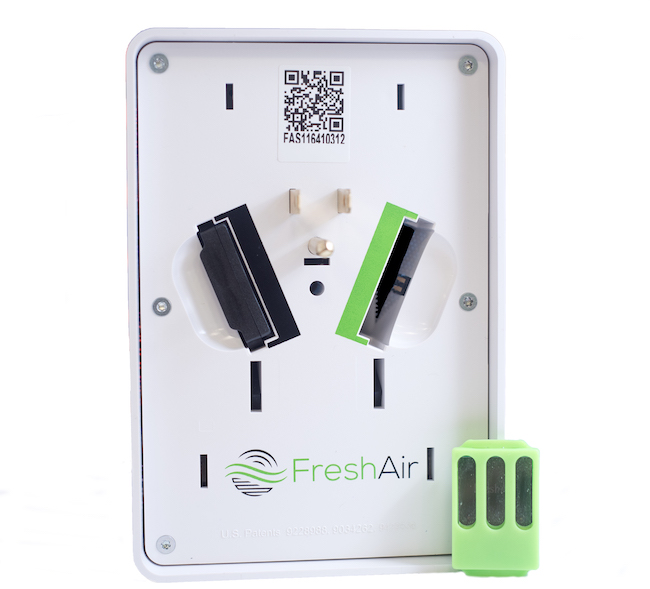
The FreshAir1 Smoking Detection System detects tobacco and marijuana smoking.

The FreshAir system sensors are “capable of detecting specific molecules in tobacco smoke and marijuana smoke,” according to a press release. Typical smoke detectors use light or radiation to detect general particles.

The devices can be plugged into standard outlets and are secured with tamper-proof screws. The devices are Wi-Fi enabled and can connect to a building’s network to connect to FreshAir’s monitoring platform.
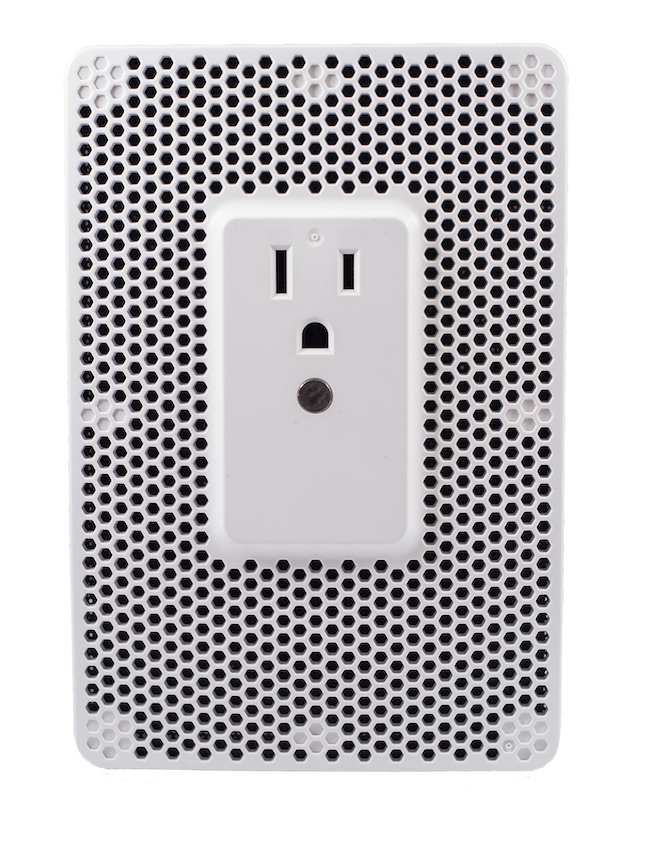
The FreshAir1 Smoking Detection System detects tobacco and marijuana smoking.

When smoking is detected in monitored space, the device sends users an immediate alert via email, computer desktop, and/or mobile phone push notification. Incident reports are timestamped, providing proof to enforce no-smoking policies. Alert history, device information, and additional information can be archived in the account through FreshAir’s mobile app or online portal.  

About the Author

Yvonne Marquez is senior editor of Spaces4Learning. She can be reached at [email protected].

Featured

  • University of Kentucky Reopens Scovell Hall

    The University of Kentucky recently reopened Scovell Hall, part of the Martin-Gatton College of Agriculture, Food and Environment (CAFE), following comprehensive renovations to the 120-year-old facility in Lexington, Ky., according to a news release.

  • Minnesota District Opens New PreK–12 School

    Gibbon-Fairfax-Winthrop Schools in Gibbon, Minn., recently announced that construction is complete on a new, $68.9-million school for students in grades PreK–12, according to a news release.

  • UT-San Antonio Begins Residence Hall Renovations

    The University of Texas at San Antonio recently began a $6-million renovation project to one of its residence halls, according to a news release. Originally completed in 1986, Chisolm Hall measures in at 120,860 square feet and is the oldest and largest residence hall on campus.

  • Designing Third Spaces That Do What AI Can't

    In 2026, education is evolving faster than ever. With AI reshaping everything from lesson planning to personalized instruction, schools and universities are turning their attention to what AI can’t replicate: spaces that foster collaboration, community, and creativity.