Smoking Detection Company Offers Product that Monitors for Tobacco, Marijuana Smoking

FreshAir, a smoking detection company, announced a new product that detects tobacco and marijuana smoking. The FreshAir1 Smoking Detection System is capable of monitoring up to 500 square feet and is suited for educational facilities to enforce no-smoking policies.
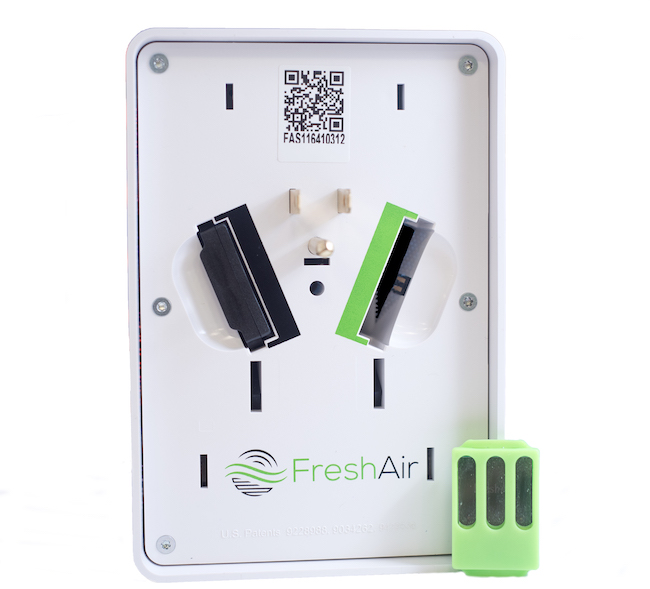
The FreshAir1 Smoking Detection System detects tobacco and marijuana smoking.

The FreshAir system sensors are “capable of detecting specific molecules in tobacco smoke and marijuana smoke,” according to a press release. Typical smoke detectors use light or radiation to detect general particles.

The devices can be plugged into standard outlets and are secured with tamper-proof screws. The devices are Wi-Fi enabled and can connect to a building’s network to connect to FreshAir’s monitoring platform.
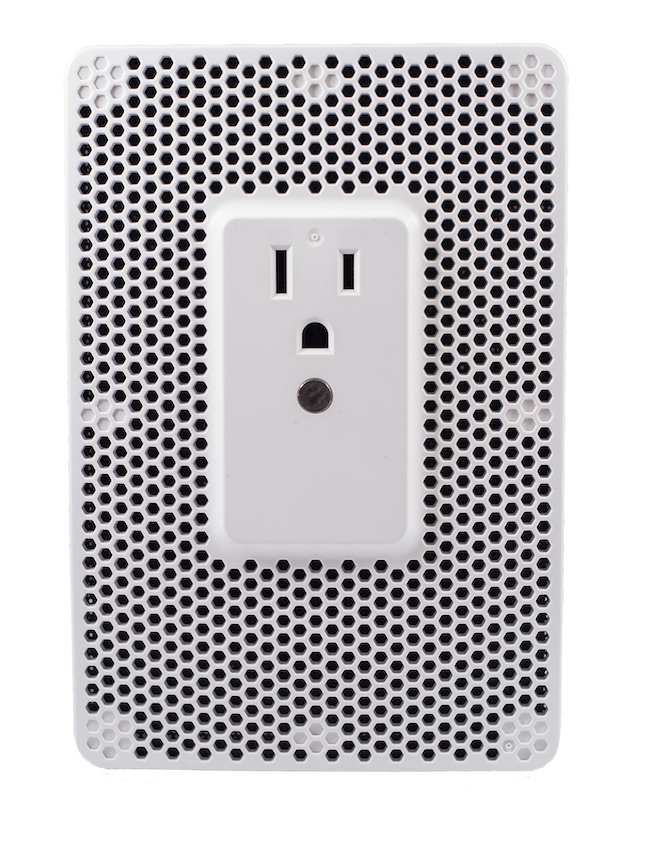
The FreshAir1 Smoking Detection System detects tobacco and marijuana smoking.

When smoking is detected in monitored space, the device sends users an immediate alert via email, computer desktop, and/or mobile phone push notification. Incident reports are timestamped, providing proof to enforce no-smoking policies. Alert history, device information, and additional information can be archived in the account through FreshAir’s mobile app or online portal.  

About the Author

Yvonne Marquez is senior editor of Spaces4Learning. She can be reached at [email protected].

Featured

  • University of Oklahoma Announces New Campus Master Plan

    The University of Oklahoma in Norman, Okla., recently announced that it will soon launch a new, comprehensive Campus Master Plan to guide the campus’ physical development during the next decade, according to a news release.

  • Universities Continue to Launch Multimillion-Dollar Campus Transformations

    What makes the current wave of campus development especially noteworthy is its emphasis on multi-use functionality and community integration. Institutions are no longer investing solely in academic or athletic facilities in isolation. Instead, they are creating destinations that blend recreation, health, housing, and event-driven economic activity.

  • A digital silhouette works at a computer, immersed in a glowing, interconnected world

    How Will AI Transform Learning Space Design?

    For years, higher education has designed learning spaces around technology as a tool for display, capture, collaboration, and connectivity. AI changes that equation.

  • Surging Demand for Student Housing Fuels Major Campus Investment Opportunities

    University leaders throughout the U.S. are accelerating plans to modernize and expand student housing as enrollment stabilizes and demand for on-campus living rebounds. Recent data from the National Center for Education Statistics indicates that total postsecondary enrollment is projected to grow through the end of the decade, with undergraduate enrollment alone expected to increase by more than 8 percent by 2030.