Virginia Commonwealth Shows Off New Engineering Research Building — Virtually

Virginia Commonwealth Shows Off New Engineering Research Building — Virtually

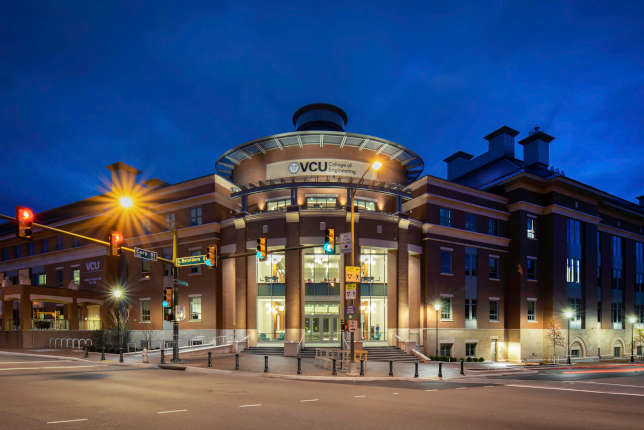
Virginia Commonwealth University's College of Engineering is celebrating the opening of its new Engineering Research Building this week — virtually.

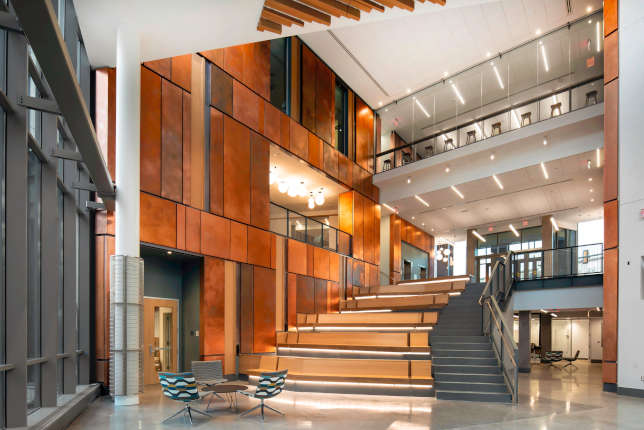
According to the university, the 133,000-square-foot building is intended to support advanced research and economic development initiatives with a design that emphasizes makerspaces, collaborative research facilities and flexible gathering areas. Maker resources will include 3D printing, bench electrical fabrication, tabletop equipment and hand tools, industrial-scale manual and CNC mills and lathes.
Virginia Commonwealth Shows Off New Engineering Research Building — Virtually

Situated in in close proximity to both one of the institution's engineering buildings and its School of Business, the new structure significantly expands the college's laboratory capacity.
Virginia Commonwealth Shows Off New Engineering Research Building — Virtually

Among the features of the new facility are:

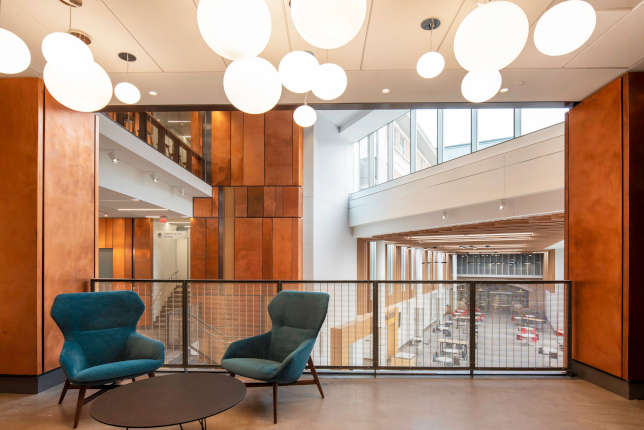
  • Interdisciplinary research laboratories;

  • Experiential learning facilities;

  • Meeting and gathering spaces;

  • Informal meeting and study areas;

  • A career services center;

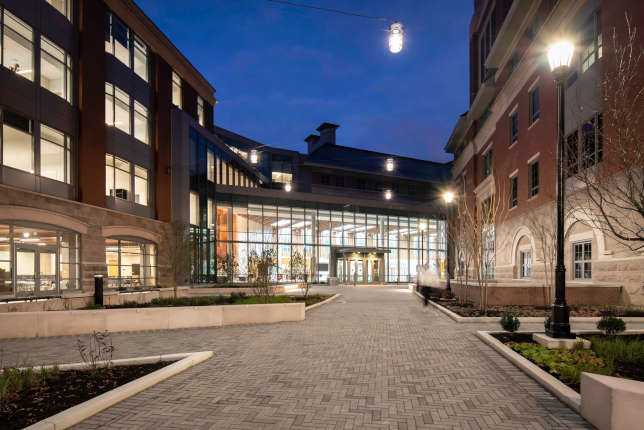
  • Wired outdoor work and gathering spaces; and

  • The "Ram Bytes" café.

University and elected officials were expected to participate in a ribbon cutting broadcast and tour over Zoom on Feb. 3, 2021.
Virginia Commonwealth Shows Off New Engineering Research Building — Virtually

Planning was initially done in 2015. The design was done by Richmond-based architecture firm Baskervill and Boston-based firm Goody Clancy.

About the Author

Dian Schaffhauser is a former senior contributing editor for 1105 Media's education publications THE Journal, Campus Technology and Spaces4Learning.

Featured

  • UTampa Breaks Ground on STEM Academic Facility

    The University of Tampa in Tampa, Fla., recently broke ground on one of its largest academic facilities ever, according to a news release. The Dickey Science Innovation Center will measure 153,000 square feet and has a scheduled completion date of fall 2028.

  • Designing Third Spaces That Do What AI Can't

    In 2026, education is evolving faster than ever. With AI reshaping everything from lesson planning to personalized instruction, schools and universities are turning their attention to what AI can’t replicate: spaces that foster collaboration, community, and creativity.

  • Q&A: How to Prevent Kitchen Grease Fires in Commercial Kitchens

    School cafeterias and university dining halls serve thousands of meals daily, relying on high-heat equipment like fryers, grills, and ovens. While these operations keep students fed, they also generate significant grease-laden vapors. Without proper controls, this grease becomes a silent fire threat. As a certified exhaust cleaning specialist and business coach who has helped hundreds of institutional facilities achieve NFPA 96 compliance, I emphasize that proactive grease management isn’t optional; it’s a core fire/life safety practice.

  • Minnesota District Converts Middle School into Community Hub

    White Bear Lake Area Schools in White Bear Lake, Minn., recently announced the end of a major renovation project that converted a former middle school into a new centralized district and community hub, according to a news release.