Leviton Lighting Brand Launches First Unit with 365DisInFx UVA Capability

Viscor, a brand of Leviton Lighting, has announced that it is launching the Visioneering LRTH-DFX luminaire lighting unit featuring 365DisInFx UVA technology. Leviton previously announced that they would be licensing this technology for future use, and this is the first product to highlight these capabilities.

“As we return to regular activity in our shared spaces, safety will continue to be the highest priority,” said Richie Westfall, the VP/general manager of Leviton Lighting & Controls. “The LRTH-DFX troffer integrated with 365DisInFx UVA technology fills a critical need by enabling continuous disinfection without requiring occupants to leave spaces.”
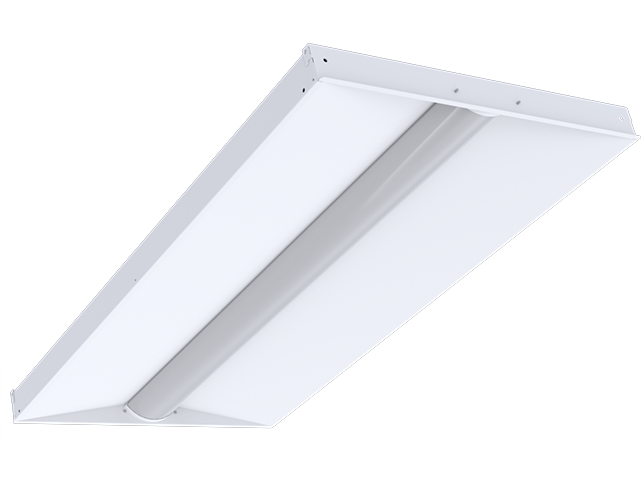
Visioneering LRTH-DFX luminaire lighting unit featuring 365DisInFx UVA technology

The LRTH-DFX builds off of the previous LRTH model with a recessed architectural luminaire and UVA technology designed to eliminate harmful bacteria and pathogens. The unit can operate continuously and function in real time while people are present, and it was designed to emit UV doses below the human health exposure limit over a 24-hour period.

“Viscor is proud to offer the first Leviton Lighting luminaire featuring 365DisInFx UVA technology under the Visioneering brand,” said Pierre Legare, executive vice president with Viscor. “With the continuous disinfection provided by LRTH-DFX, we hope to support cleaner spaces that will allow building occupants to focus more on the activities they are doing rather than the cleanliness of the spaces they are in.”

About the Author

Matt Jones is senior editor of Spaces4Learning. He can be reached at [email protected].

Featured

  • Hawaii Elementary School Reopens Following $25M Campus Modernization

    Haʻaheo Elementary School in Hilo, Hawaii, has reopened to students following a three-year, $25-million campus modernization and expansion project that significantly increases the school's instructional space while preserving one of the island's oldest educational institutions, according to local news.

  • GeoCam and UCLA: Modernizing Campus Accessibility Mapping

    In early 2025, UCLA partnered with GeoCam to capture and modernize its pedestrian infrastructure data. The goal was ambitious but clear: to produce a high-accuracy, imagery-backed digital map of every sidewalk, pathway, ramp, and ADA-related feature on UCLA’s 419-acre campus.

  • University of Pennsylvania Releases Design of Future Physical Sciences Building

    The University of Pennsylvania (Penn) in Philadelphia, Penn., recently released renderings of an upcoming 350,000-square-foot Physical Sciences Building, according to news release. The facility was designed by CO Architects and will unite the university’s departments of Physics and Astronomy, Mathematics, and Earth and Environmental Science.

  • Can AI Help Build Stronger Communities in Student Housing?

    Student housing success is shifting from operational performance to student experience, with belonging now at the center. A recent 2025 report underscores a growing emphasis on student well-being, community, and engagement, signaling that expectations now extend beyond logistics to ensure students feel supported in their living environments. AI is enabling that shift by reducing administrative workload and giving teams more time to focus on meaningful student engagement.