Midwestern State to Update Science Building with Texas Funding

A Texas university has received nearly $45 million for capital projects from the state. Midwestern State University will use its allocation to update a science building and do infrastructure upgrades across the campus.

Bolin Science Hall will be the recipient of most of the funding. Built in the 1960s, the structure underwent a partial update in 1997. The latest renovation will modernize lecture halls, teaching and research laboratories, conference rooms and offices, including adding technology enhancements and life-safety improvements.
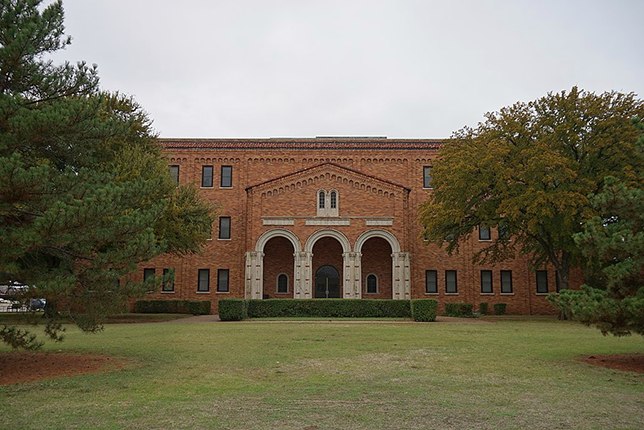
Bolin Hall at Midwestern State University

"Over the past 20 years, our spaces in Bolin Science Hall have become some of the most utilized on campus," said Marcy Brown Marsden, dean of the McCoy College of Science, Mathematics & Engineering, in a statement. "This promise of a Bolin Hall transformation will allow us the needed spaces and resources to recruit students to MSU Texas and significantly enhance our ability to offer a modern facility for students to learn, conduct research and collaborate."

The MSU funding was part of a $3.3 billion bond allocation recently approved by the Texas legislature, which is sending millions to the University of Texas and Texas state university institutions, covering construction and updates to research buildings, health facilities and other projects. MSU has also received a $5 million pledge from the Texas-based McCoy Foundation to finish its Bolin Science Hall work.

About the Author

Dian Schaffhauser is a former senior contributing editor for 1105 Media's education publications THE Journal, Campus Technology and Spaces4Learning.

Featured

  • Nashville Elementary School Receives LEED Gold Certification

    Goodlettsville Elementary School, part of Metro Nashville Public Schools in Nashville, Tenn., recently achieved LEED Gold Certification from the U.S. Green Building Council (USGBC), according to a news release. The 81,750-square-foot school opened in 2023 and was designed by Goodwyn Mills Cawood (GMC).

  • Building Beyond Simulation: Creating Immersive Ecosystems for Healthcare Education

    Health sciences education is one of the fastest-growing facility types in colleges and universities. The demand for medical, nursing, and allied health professionals is driving the creation and renovation of medical simulation training facilities that provide students with real-world experience through advanced simulation-based learning.

  • Planning with Clarity: Using AI to Make Better Campus Decisions, Not Just Better Designs

    Higher education leaders are being asked to make increasingly high-stakes decisions about campus facilities amid greater uncertainty than ever before. Social and economic pressures, shifting enrollment, and evolving learning models compete with growing deferred maintenance needs to strain even the most robust infrastructure budgets.

  • University of Pennsylvania Releases Design of Future Physical Sciences Building

    The University of Pennsylvania (Penn) in Philadelphia, Penn., recently released renderings of an upcoming 350,000-square-foot Physical Sciences Building, according to news release. The facility was designed by CO Architects and will unite the university’s departments of Physics and Astronomy, Mathematics, and Earth and Environmental Science.