Calif. Community College Breaks Ground on STEM Education Facility
The Mt. San Jacinto Community College District recently broke ground on a new STEM Education building for its San Jacinto Campus in San Jacinto, Calif. The facility is set to stand three stories and cover 57,374 square feet, and it’s scheduled for completion by fall 2023. The college is partnering with builders C. W. Driver Companies and design firm LPA Architects on the project, which is estimated to cost about $37 million, according to a news release.
The new building will centralize the campus’ expanding STEM departments—including biology, physical science and math—which are currently spread across several buildings across multiple campuses. It’s set to include science labs and lecture rooms, general classrooms, labs for math and general studies, and faculty offices.
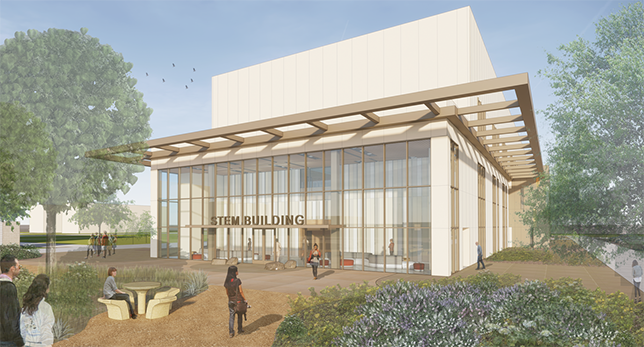
Photo Credit: LPA Architects
“Our goal at MSJC is to provide our students with the best possible education to prepare them for their future endeavors,” said Todd Franco, Dean of Facilities Planning, District Construction & Support Services at Mt. San Jacinto Community College. “This new centralized hub for our math and science departments will allow our teams to collaborate in a permanent space that will contribute greatly to the STEM education and research at MSJC.”
C .W. Driver previously completed construction of the Mt. San Jacinto College Temecula Valley Campus in 2021. MSJC encompasses 116 community colleges across California and serves students within a 1,700-square-mile range from the San Gorgonio Pass to Temecula.
“C.W. Driver Companies is proud to continue our partnership with Mt. San Jacinto College to provide their students with a best-in-class campus,” said David Amundson, project executive at C.W. Driver Companies. “It was an honor to be able to leverage our decades of experience in higher education to provide students and faculty with a centralized, permanent facility to further their research and learning.”
About the Author
Matt Jones is senior editor of Spaces4Learning. He can be reached at [email protected].