Overly Door Company Introduces Taller Option

Overly Door Company in Greensburg, Pa., recently announced that it has introduced a larger version of its Wood Acoustic Door. Previously, the original maximum size was four feet wide and eight feet tall. This new option, the Tall Wood Acoustic Door, measures four feet wide and ten feet tall for all models 1-3/4” thick—as well as for the STC 50 model, which measures 2-1/4” thick.
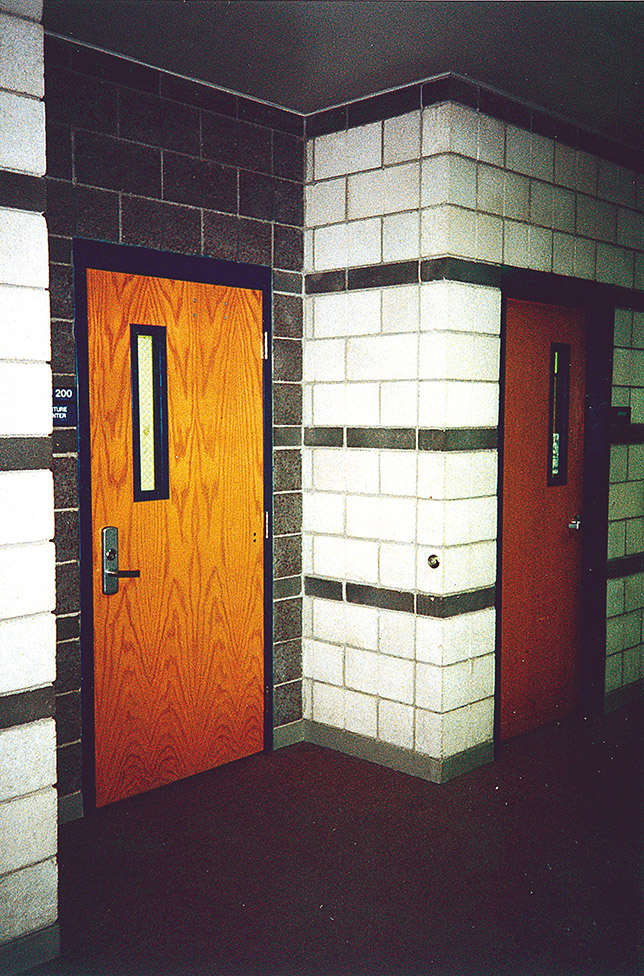
Overly Tall Wood Acoustic Door

The product is UL fire rated for 45 minutes according to UL Standard for Safety 10C, according to a press release. Other features include dual glazed vision lights, level swing hinges with fully mortised automatic door bottoms and Overly Cam-Lift Hinges with Super H door bottoms.

Overly offers FSC and non-FSC wood veneers, both traditional and exotic, finished in customized colors according to individual project needs. Non-traditional options include plastic laminates. Visit the Overly website for more information.

About the Author

Matt Jones is senior editor of Spaces4Learning. He can be reached at [email protected].

Featured

  • Doerr School of Sustainability Accelerator

    From Concrete Warehouse to Innovation Hub: Accelerating Sustainability at Stanford

    The transformation of a once windowless, concrete publishing warehouse into a sun-drenched center for global innovation began with a single, fundamental challenge: how to turn an industrial storage shell into a space built for human connection.

  • Houston-Area High School Breaks Ground on 117,000SF Multi-Use Facility

    North Shore Senior High School, part of Galena Park ISD in Houston, Texas, recently broke ground on a new multi-use facility for student extracurriculars, according to a news release. The North Shore Multi-Use Facility will include dedicated practice and training space for the school’s athletics and fine arts programs.

  • Surging Demand for Student Housing Fuels Major Campus Investment Opportunities

    University leaders throughout the U.S. are accelerating plans to modernize and expand student housing as enrollment stabilizes and demand for on-campus living rebounds. Recent data from the National Center for Education Statistics indicates that total postsecondary enrollment is projected to grow through the end of the decade, with undergraduate enrollment alone expected to increase by more than 8 percent by 2030.

  • Can AI Help Build Stronger Communities in Student Housing?

    Student housing success is shifting from operational performance to student experience, with belonging now at the center. A recent 2025 report underscores a growing emphasis on student well-being, community, and engagement, signaling that expectations now extend beyond logistics to ensure students feel supported in their living environments. AI is enabling that shift by reducing administrative workload and giving teams more time to focus on meaningful student engagement.