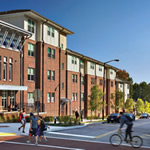
Cost savings, aesthetic value and speed of construction make wood a material of choice for campus construction.
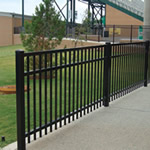
Campus fencing serves many different functions, be it to enhance landscaping or visual identity, for safety, noise reduction and privacy, or directing traffic. There are any number of types of fencing and other amenities to consider when site planning on campus.
The design and up-fit of educational facilities should be the result of a whole systems approach and not one of designing and installing isolated pieces and parts.
Facilities and the conditions of the learning environment have an effect on students and staff.
We need a non-governmental foundation, like EFL, to support and fund exploration.
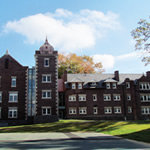
Permanent modular construction can provide fast, green solutions for schools.

Adaptive technologies help students with disabilities fully engage in campus life.
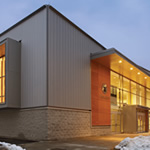
Today's options for building exteriors vary widely from traditional brick. An expanded palette of materials offers vivid color and texture choices to architects and designers.
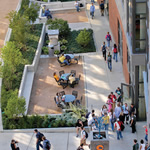
Integrating Crime prevention through Environmental Design (CPTED) concepts into master planning and design is one demonstrated way to create an overall safe campus.

The forgotten component of the educational experience.
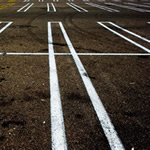
Nobody thinks of parking, until they need it. Then it's a chore. Technology promises to make finding and paying for a space easier, and might even convince drivers to take the bus.
Students with disabilities are in need of accommodations, but every student stands to benefit from the incorporation of design elements that address acoustical and visual access, as well as different learning styles and proper technology integration. Acce