Denver School District Recycles Old Ceilings
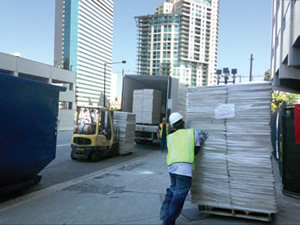
Denver Public Schools found a way to promote sustainability and benefit their own construction projects with Armstong’s Recycling Program.
With the adoption of its Sustainability Management Plan, Denver Public Schools (DPS) is challenging students, teachers, staff, and parents to practice an “ethic of sustainability” to help reduce the impact its 185 schools have on the environment.
A major focus area of the plan calls for measurable improvements in landfill diversion rates and reduced greenhouse gas emissions from solid waste.
When renovations began on a 14-story office building DPS was converting to a vertical campus in downtown Denver, school officials met with the contractor to set sustainability goals for the project. “Recycling and repurposing of the materials that came out of the building was probably the number one item on that sustainability list,” explains DPS Construction Project Manager Katheryn Zeeb.
A large part of the construction waste consisted of old ceiling tiles that had been removed from the building during renovation. The contractor recommended that DPS recycle the old ceiling tiles through the Armstrong Ceiling Recycling Program.
The program enables building owners to ship discarded ceiling tiles from demolition and renovation projects to the nearest Armstrong plant as an alternative to landfill disposal. The discarded tiles are then used to manufacture new ceiling tiles.
Through its participation in the program, DPS eventually recycled over 131,000 square feet of used ceiling tiles, diverting nearly 67 tons of construction waste from landfills.
“The recycling program has proven to be advantageous from so many different levels – from savings on container costs and landfill fees to stewardship of resources for future generations,” says DPS Construction Services Director James Allen. “It’s been a good experience. Now that we’ve done it once, we’ll continue to do it. We’re a school district and we are life-long learners.”
www.armstrong.com
This article originally appeared in the issue of .