Association for LEARNING ENVIRONMENTS
- By Barbara C. Worth
- 03/01/16

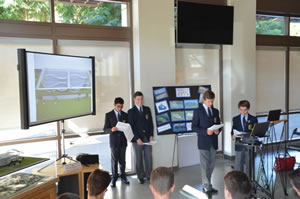
A Step Forward. The newly branded Association for LEARNING ENVIRONMENTS (A4LE) which was formerly known as Council of Educational Facility Planners International (CEFPI), is a professional organization focused on improving the spaces in which children learn As part of that mission, they have the annual James D. McConnell Award competition which recognizes the comprehensive planning process for facilities that enhance education, meet multiple goals and hold purpose and distinction in the community. Picture at top is the 2015 winner, Dr. Phinnize J. Fischer Middle School in Greenville, S.C. Pictured above is one of the SchoolsNEXT Competition (formerly the School of the Future Competition) presentations given at the 2015 annual conference. This competition is open to middle school students, and challenges student teams to design their learning environments to enhance learning, conserve resources, be environmentally responsive and engage the surrounding community. The solution requires students to follow a planning process from the concept phase to completion of the project, with thorough documentation. The students then present their project to a jury for review.
THE BOARD OF DIRECTORS of the Association for LEARNING ENVIRONMENTS (formerly CEFPI) proudly unveiled the organization’s new name and brand at the LearningSCAPES 2015 Conference in San Diego.
The new name is just a portion of the organization’s taking a step forward — a new beginning for the collaborative network of professionals who plan learning environments.
The Association for LEARNING ENVIRONMENTS is as strong as its members. Exponential growth of the organization, predominantly in the school district sector, precipitated this movement forward. In the past few years the association experienced a 28-percent growth rate, surpassing 4,500 members for the first time in its history!
SchoolsNEXT, formerly the School of the Future Competition and the association’s LearningSCAPES Conference are among the first steps in the rebranding effort.
Central to the development of the rebranding effort was an in-depth review of how the association supports its members. “Schools are designed, planned and built at the local level,” said CEO John Ramsey.” Our regions and chapters are what make this organization function so well. Through this rebranding exercise we’ve moved from a top-down focus to a grassroots-up approach that ensures we provide our members the resources and tools they need to be successful.”
“Our strategic plan has focused on positioning the organization well into the future,” said Chair Scott Layne. “An enormous team of people engaged in analysis and discussion about who we are, what we do and what people respond to. I am confident that we will continue the great work that has brought us to this moment, and I know that we will forge new paths of excellence, changing the face of education for future generations,” Layne concluded.
With the new branding, the Association for LEARNING ENVIRONMENTS looks forward to delivering value to its members and to growing the community of passionate professionals committed to creating better learning environments everywhere.
The Association for Learning Environments (A4LE), formerly the Council of Educational Facility Planners (CEFPI), is the only professional organization whose primary purpose is improving the places where children learn. With more than 4500 members, A4LE encompasses six geographic regions across the United States, and supports regional representation in Canada, Australasia and the UK. A4LE embraces a collaborative network of professionals with one single goal — building healthy, safe, resilient and sustainable 21st-Century learning places that inspire transformation in education, enhance student and teacher performance, and support culture and community vitality. To learn more, visit www.a4le.org or follow us on Twitter @A4LE2.
This article originally appeared in the issue of .
About the Author
Barbara C. Worth is the director of strategic and private development at the Association for Learning Environments (A4LE), formerly the Council of Educational Facility Planners (CEFPI). A4LE is the only professional organization whose primary purpose is improving the places where children learn. With approximately 4,400 members, A4LE encompasses six geographic regions across the United States, and supports regional representation in Canada, Australasia, and the UK. To learn more, visit www.a4le.org or follow us on Twitter @A4LE2.