Designs Unveiled for Ohio High School

Designs for the new Fremont Ross High School in Fremont, Ohio were unveiled recently for public viewing. The new facility, designed by TDA Architecture, and is slated to feature 29 classrooms, along with a student resource office station and a prominent entry corridor.
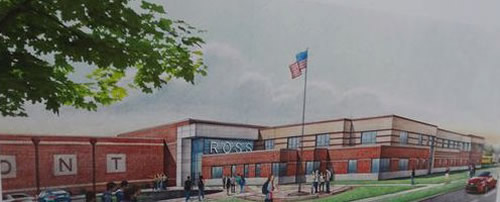
Fremont Ross High School

The new school is one of many proposed upgrades/new constructions in the district. The design and development phase of the project will be completed by September of 2018, with a final completion date of 2021. The current high school facility will remain open during design and construction, and be demolished following the opening of the new high school.

Featured

  • Geometric abstract school illustration

    How Design Shapes Learning and Success

    Can the color of a wall, the curve of a chair, or the hum of fluorescent lights really affect how a student learns? More schools are beginning to think so.

  • Beyond Four Walls

    Operable glass walls provide a dynamic solution for educational spaces. They align with today’s evolving teaching methods and adapt to the needs of modern learners. Beyond the functional versatility, movable glass walls offer clean, contemporary aesthetics, slim and unobtrusive profiles, and versatile configurations that cater to the evolving needs of students and educators alike.

  • UCNJ Launches $30M Modernization of Physical Education Center

    The Union College of Union County (UCNJ) in Cranford, N.J., recently broke ground on a new $30-million modernization project for its Physical Education Center (PECK), according to a news release. The college partnered with DIGroup Architecture for the project’s design, transitioning the existing 42,000-square-foot structure into a campus hub for student athletics and campus life.

  • Different Starting Points, Same End Goal

    Higher education campuses can enhance student experience by implementing mobile credentials to streamline building access, on-campus payments, and access to other amenities. This enables students to connect to their campuses through the technology they use most: their mobile devices.

Digital Edition