Plans Move Forward on Cornell University Housing Complex
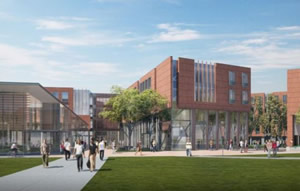
Cornell Dorm ComplexPlans for a new dormitory complex at Cornell University in Ithaca, NY, moved forward recently. The proposed complex would house around 2,000 students and allow for older dorms on campus to undergo needed maintenance.

The complex would consist of two distinct living areas for students. The proposed sophomore dorms on the northern part of the campus would add 1,200 beds and a new dining hall. The first-year dorms would be constructed on the western portion of the campus and provide an additional 800 beds.

The city of Ithaca is working with Cornell on the project, serving as leaders of environmental review.

Featured

  • Fayetteville State University Opens New Residence Hall

    Fayetteville State University (FSU) in Fayetteville, N.C., recently completed construction on a new $50-million residence hall, according to a news release. The university partnered with KWK/Jenkins • Peer Architects on the design of Bronco Pride Hall.

  • University of Southern Mississippi Starts Construction on Oyster Hatchery

    The University of Southern Mississippi (USM) recently announced that construction has begun on a new oyster hatchery at its Gulf Coast Research Laboratory (GCRL) Thad Cochran Marine Aquaculture Center (TCMAC) Cedar Point campus in Ocean Springs, Miss., according to a news release.

  • North Texas School District Completes Third New Elementary School

    The Denton Independent School District in Dallas, Texas, recently finished construction on its third prototype design elementary school, Reeves Elementary, according to a news release.

  • Image credit: O

    Strategic Campus Assessment: Moving Beyond Reactive Maintenance in Educational Facilities

    While campuses may appear stable on the surface, building systems naturally evolve over time, and proactive assessment can identify developing issues before they become expensive emergencies. The question isn't whether aging educational facilities need attention. It's how institutions can transition from costly reactive maintenance to strategic asset management in a way that protects both budgets and communities.

Digital Edition