Unique Furniture Enhances Learning
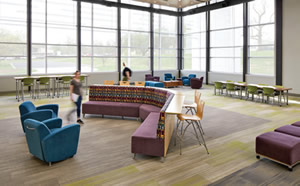
National Office Furniture provided furniture that gave TCALC classrooms the look and feel of a modern workplace.
The Topeka Center for Advanced Learning and Careers (TCALC) is an innovative high school program that provides students the opportunity to focus on professional skills like project management, business ethics, time management, teamwork, and creativity. Through a project-based curriculum, students receive authentic exposure to corporate environments while developing the skills needed to succeed in 21st-century professions.
The facility promotes this progressive approach through its variety of learning spaces. The facility was designed as if students are fully immersed in a professional culture, and offers collaboration spaces, multi-use areas, private offices, and team rooms to accommodate the unique curriculum.
To prepare students for high-skill, high-demand jobs, TCALC offers a variety of hands-on experiences and features spaces that encourage interaction within a professional atmosphere. Maneuver tables and Jiminy seating provide mobility, allowing students and faculty to reconfigure and accommodate their needs. Fringe, Reno, and Swift lounge furniture create a variety of collaboration spaces and casual commons areas. Private offices support flexibility with Tessera casegoods, while the Footings, Strassa, and WaveWorks tables provide unique gathering and meeting spaces.
Through four pathways (Engineering and Advanced Manufacturing, Bioscience and Biomedical, Business, and Human Services) TCALC is teaching business ethics and skills within a professional atmosphere, allowing students to become more comfortable in a business culture, setting them up for success in their careers after graduation.
“Our goal is to have a unique, welcoming, and thought-provoking educational space which had the look and feel of a modern day corporate business environment. National Office Furniture was instrumental in helping us achieve that goal,” says Larry Robbins, deputy superintendent of Operations, Topeka Public Schools.
www.NationalOfficeFurniture.com
This article originally appeared in the School Planning & Management September 2018 issue of Spaces4Learning.