Computer & Automotive Engineering Building Underway at Weber State University

OGDEN, UT – The new Computer & Automotive Engineering Building on the campus of Weber State University is underway. The 50,000-square-foot building will help the College of Engineering, Applied Science & Technology (EAST) accommodate growth.
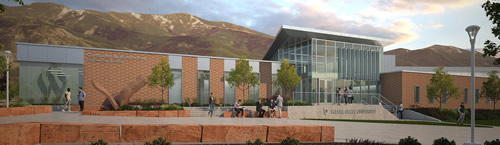
Weber State University Engineering Building

For the past five years, Weber State has led state institutions in awarding engineering and computer science degrees. In addition to providing a location for computer science and software engineering courses, the building will be the new home of the automotive technology program.

GSBS Architects designed the building and R&O Construction has been awarded the contract. Construction is expected to be complete in summer 2020.

Featured

  • Opportunity by Design Framework

    Opportunity by Design

    Educational improvement efforts often focus on curriculum, instruction, assessment, professional development, and intervention systems while treating the physical school building as background. But school design is not a passive backdrop to learning — it is a structural lever for equity.

  • Indiana University Launches Capital Campus in D.C.

    Indiana University recently held a ribbon-cutting ceremony for the new IU Capital Campus in Washington, D.C., according to university news. The eight-story facility will provide a central hub for the university’s existing programs and business operations based in D.C., uniting them under one roof and providing the opportunity to expand.

  • Fargo, N.D., Starts Construction on Consolidated Elementary School

    Fargo Public Schools in Fargo, N.D., recently announced the beginning of construction on a new elementary school, according to a news release. The district partnered with ICON Architectural Group and Kraus-Anderson Construction on the new Horace Mann Elementary School.

  • How Proactive Maintenance Can Transform Athletic Facilities into Strategic Assets for College Sports

    College athletics is entering one of the most transformative periods in its history. With NIL reshaping financial models and competitive expectations, athletic departments across the country are being asked to do more than ever with increasingly constrained resources.