Computer & Automotive Engineering Building Underway at Weber State University

OGDEN, UT – The new Computer & Automotive Engineering Building on the campus of Weber State University is underway. The 50,000-square-foot building will help the College of Engineering, Applied Science & Technology (EAST) accommodate growth.
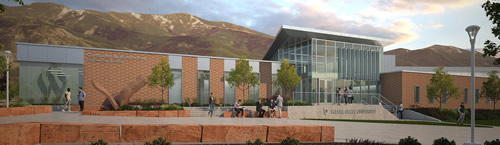
Weber State University Engineering Building

For the past five years, Weber State has led state institutions in awarding engineering and computer science degrees. In addition to providing a location for computer science and software engineering courses, the building will be the new home of the automotive technology program.

GSBS Architects designed the building and R&O Construction has been awarded the contract. Construction is expected to be complete in summer 2020.

Featured

  • University of Kentucky Receives $150M Gift Toward New Arts District

    The University of Kentucky’s Board of Trustees recently received a $150-million gift from The Bill Gatton Foundation, according to a university news release, to build a new arts district on the campus in Lexington, Ky. The new district will feature a new College of Fine Arts building and a multi-hundred-seat theater, among other amenities.

  • UT System Approves First Funds for New Campus

    The University of Texas System Board of Regents recently approved funds to build the first facility of a new campus in far west Fort Worth, Texas, according to university news. UTA West will serve as a branch of the University of Texas at Arlington and is scheduled to open in fall 2028.

  • NWEA Report Recommends K–12 Natural Disaster Recovery Strategies

    The Northwest Evaluation Association (NWEA), a K–12 assessment and research organization, recently announced the release of a new playbook for schools and communities recovering from extreme weather events, according to a news release.

  • Pitzer College

    Designing for Change in Higher Ed Learning Environments

    Higher education will continue to evolve, and learning environments must evolve with it. By prioritizing adaptable infrastructure, thoughtful reuse, strong energy performance, and wellness-centered design, campuses can create spaces that support learning today while remaining flexible for the future.