District Solar Deal Includes Learning Wagons

An Indiana district is setting up solar farms that will cover the energy usage for three of its schools. Hamilton Southeastern Schools will be working with Ameresco to implement two solar arrays, with a total of 4,800 panels and the capacity of generating 2.4 million kWh annually. The company said that level of energy production was sufficient to power 294 homes for a year, avoiding 1,687 metric tons of carbon dioxide emissions.
District Solar Deal Includes Learning Wagons

District Solar Deal Includes Learning Wagons

District Solar Deal Includes Learning Wagons


Source: Hamilton Southeastern Schools

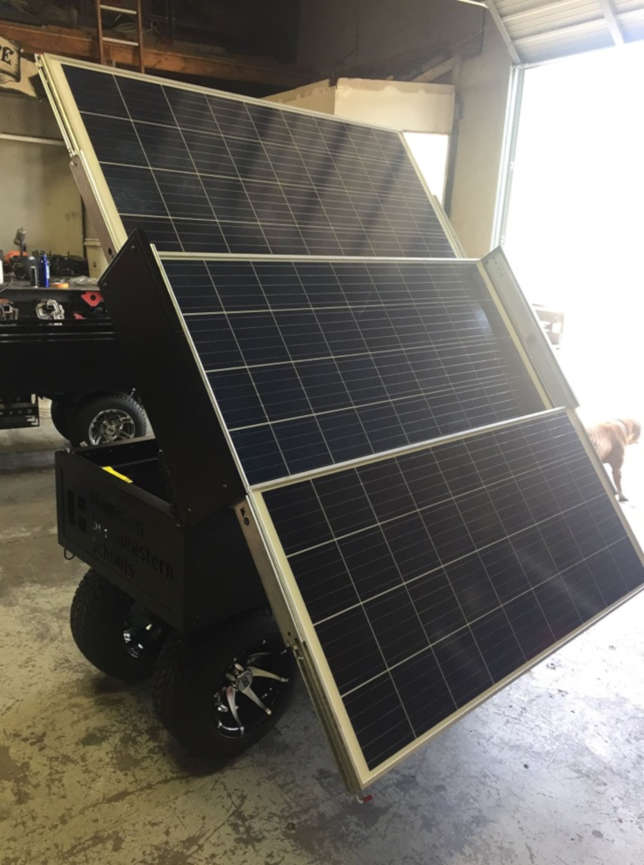
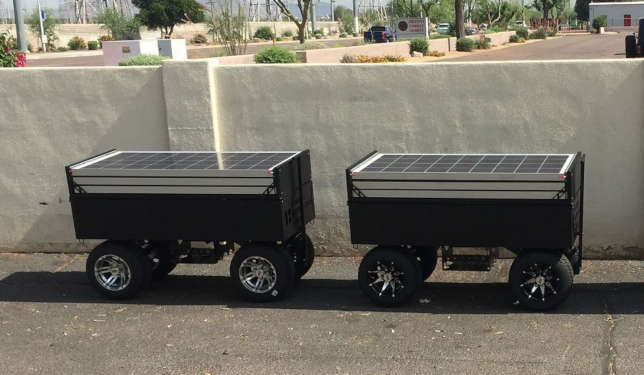
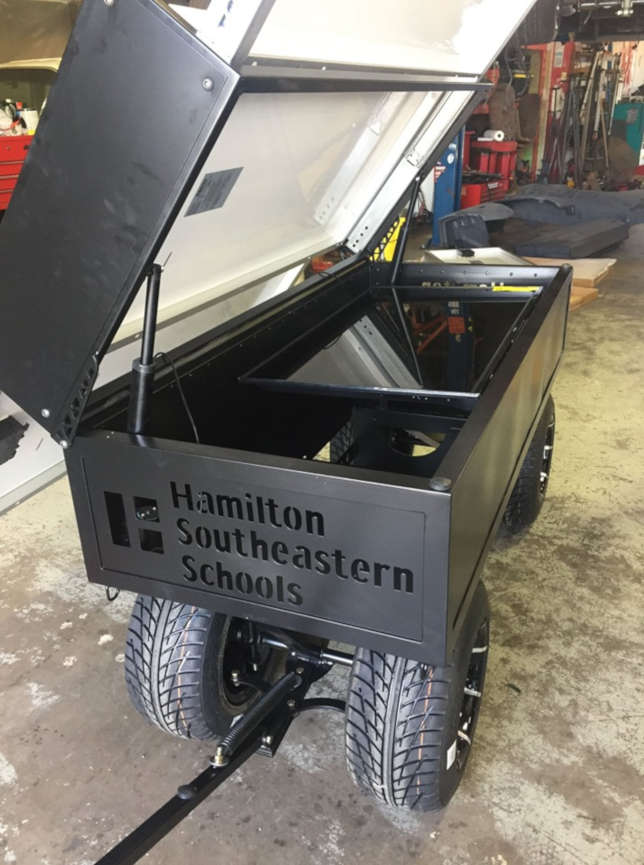
The deal also includes two "solar wagons" and programming to help the schools add solar-oriented curriculum into the classroom.

Funding is coming from a combination of four-year bond fees and cost savings expected from the solar arrays. According to local reporting, the investment is expected to be covered in 11 years through cost savings.

"Our partnership with Ameresco has already allowed us to invest in projects that directly benefit our students and create a more sustainable learning environment at our schools," said Superintendent, Allen Bourff, in a statement. According to the district the project, which began in January, has already loosened up sufficient budget to cover construction of a playground at an intermediate school, with the expectation that two more will be built in the future.

About the Author

Dian Schaffhauser is a former senior contributing editor for 1105 Media's education publications THE Journal, Campus Technology and Spaces4Learning.

Featured

  • University of Oklahoma Announces New Campus Master Plan

    The University of Oklahoma in Norman, Okla., recently announced that it will soon launch a new, comprehensive Campus Master Plan to guide the campus’ physical development during the next decade, according to a news release.

  • Preparing for the Next Era of Healthcare Education, Innovation

    Across the country, public universities and community colleges are accelerating investments in healthcare education facilities as part of a broader strategy to address workforce shortages, modernize outdated infrastructure, and expand clinical training capacity. These projects, which are often located at the center of campus health and science districts, are no longer limited to traditional classrooms.

  • Spaces4Learning Trends & Predictions for Educational Facilities in 2026: Part II

    As education leaders look toward 2026, the design of K–12 and higher education facilities is being reshaped by powerful, converging forces. Survey respondents point to the rapid growth of Career and Technical Education, deeper alignment with workforce and industry needs, and the accelerating influence of AI and emerging technologies.

  • NWEA Report Recommends K–12 Natural Disaster Recovery Strategies

    The Northwest Evaluation Association (NWEA), a K–12 assessment and research organization, recently announced the release of a new playbook for schools and communities recovering from extreme weather events, according to a news release.