New Academic Hub Planned for Drury University

SPRINGFIELD, MO – Drury University has announced Cooper Robertson as architect for its new Enterprise Center, a major academic building set to rise on the institution’s growing Springfield, MO, campus — and its first building project to be developed based on Cooper Robertson’s 2017 master plan.
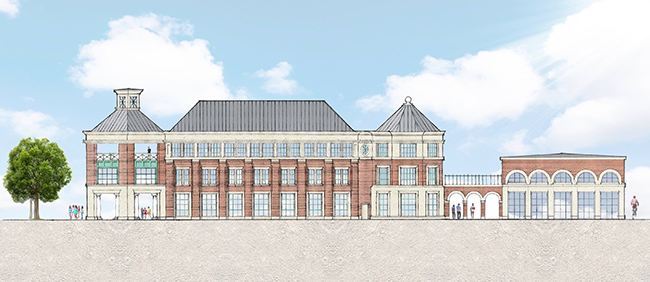
Drury University Academic Center

Rendering courtesy of Cooper Robertson

Designed in collaboration with Trivers Associates architects, the vision for the three-story, 54,772-square-foot Enterprise Center includes space for Drury's business and political science academic programs, as well as for high-tech student collaborative areas, facilities for guidance services and an executive conference center. According to Drury leaders, the project highlights an emphasis on entrepreneurship, innovation and interdisciplinary learning, and reflects the master plan’s recommendations for strategic moves that address the needs of today’s students in a rapidly changing world.

Other key features of the new building include an 11,000-square-foot Center for Executive Education attached by a colonnade to the main building. This conference center and flexible event space will be used extensively by the entire Drury campus as well as the greater Springfield community, reflecting the master plan’s goal of more tightly weaving Drury University into the fabric of its surrounding neighborhoods.

Groundbreaking is anticipated for spring 2020.

Featured

  • Little Grand Market

    Designing for Belonging: Why Student Wellness Starts with Space

    From walkable site planning to flexible interiors, intentional design choices play a critical role in how students experience comfort, connection, and community.

  • Miami University Approves New $242M Multipurpose Arena

    Miami University in Oxford, Ohio, recently announced that its Board of Trustees has approved construction of a new multipurpose arena at Cook Field, according to university news. The $242-million project will serve as a new centralized hub for student life and create space for economic development on campus.

  • Pitzer College

    Designing for Change in Higher Ed Learning Environments

    Higher education will continue to evolve, and learning environments must evolve with it. By prioritizing adaptable infrastructure, thoughtful reuse, strong energy performance, and wellness-centered design, campuses can create spaces that support learning today while remaining flexible for the future.

  • California K–12 District Finishes Renovations on Multi-Sport Stadium

    The Alameda Unified School District (AUSD) in Alameda, Calif., recently announced the completion of a renovation project on the Encinal Jr. & Sr. High School stadium, according to a news release. The district partnered with Quattrocchi Kwok Architects (QKA) and Bothman Construction on the facility, and funding came from Bond Measure B.