Virginia Commonwealth Shows Off New Engineering Research Building — Virtually

Virginia Commonwealth Shows Off New Engineering Research Building — Virtually

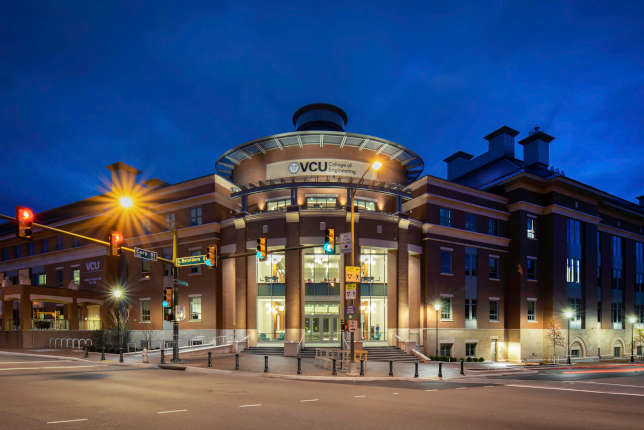
Virginia Commonwealth University's College of Engineering is celebrating the opening of its new Engineering Research Building this week — virtually.

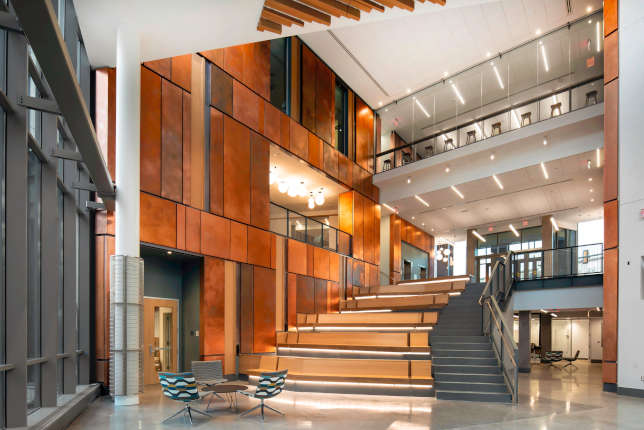
According to the university, the 133,000-square-foot building is intended to support advanced research and economic development initiatives with a design that emphasizes makerspaces, collaborative research facilities and flexible gathering areas. Maker resources will include 3D printing, bench electrical fabrication, tabletop equipment and hand tools, industrial-scale manual and CNC mills and lathes.
Virginia Commonwealth Shows Off New Engineering Research Building — Virtually

Situated in in close proximity to both one of the institution's engineering buildings and its School of Business, the new structure significantly expands the college's laboratory capacity.
Virginia Commonwealth Shows Off New Engineering Research Building — Virtually

Among the features of the new facility are:

  • Interdisciplinary research laboratories;

  • Experiential learning facilities;

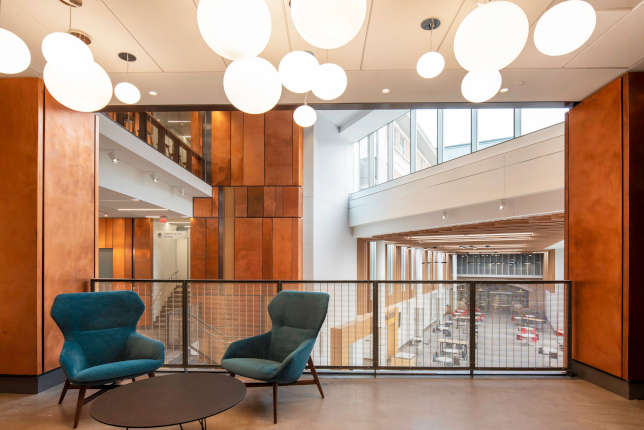
  • Meeting and gathering spaces;

  • Informal meeting and study areas;

  • A career services center;

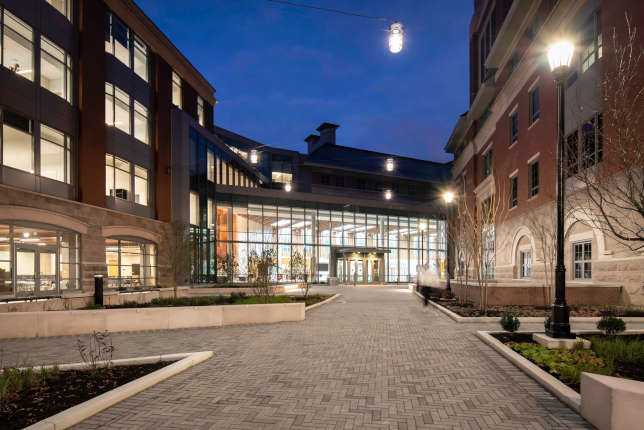
  • Wired outdoor work and gathering spaces; and

  • The "Ram Bytes" café.

University and elected officials were expected to participate in a ribbon cutting broadcast and tour over Zoom on Feb. 3, 2021.
Virginia Commonwealth Shows Off New Engineering Research Building — Virtually

Planning was initially done in 2015. The design was done by Richmond-based architecture firm Baskervill and Boston-based firm Goody Clancy.

About the Author

Dian Schaffhauser is a former senior contributing editor for 1105 Media's education publications THE Journal, Campus Technology and Spaces4Learning.

Featured

  • Pitzer College

    Designing for Change in Higher Ed Learning Environments

    Higher education will continue to evolve, and learning environments must evolve with it. By prioritizing adaptable infrastructure, thoughtful reuse, strong energy performance, and wellness-centered design, campuses can create spaces that support learning today while remaining flexible for the future.

  • South Carolina District Starts Construction on $50M Middle School Renovation

    The Aiken County Public School District in North Augusta, S.C., recently held a groundbreaking ceremony for the $50-million renovation and expansion of North Augusta Middle School, according to a news release. The project’s funding comes from the 2024 renewal of a one-cent sales tax approved by local voters.

  • University of Arizona Approves New Residence Hall

    The Arizona Board of Regents recently approved plans for a new residence hall at the University of Arizona in Tucson, Ariz., according to a news release. The new facility is scheduled to open in fall 2028 and have the capacity for more than 1,200 students, enforcing a new university expectation that all first-year students live on campus.

  • Massachusetts K–12 District Selects Architect for New Junior High

    Swansea Public Schools in Swansea, Mass., recently announced that it has selected Finegold Alexander Architects to design a new junior high school for the district, according to a news release. The firm will create the Feasibility Study and Schematic Design for Joseph Case Junior High School after a lengthy selection process by the Massachusetts School Building Authority (MSBA).