Additional Energy-Saving Upgrades Planned for U Arkansas
- By Dian Schaffhauser
- 06/08/21
The University of Arkansas is about to embark on a new round of energy-saving upgrades for its campus. The improvements will include the addition of LED lighting; fault detection diagnostics; upgrades to HVAC; and examination of building envelope systems and other retro-commissioning work. In total, the latest project will encompass some six million square feet of facilities. The upgrades are expected to reduce annual energy expenses by $1.35 million and reduce yearly power demands by the equivalent of 1,240 homes.
Entegrity Energy Partners will undertake the project, overseen by the Arkansas Office of Energy. Entegrity is a Little Rock-based energy services company. The Office of Energy promotes energy efficiency, clean technology and sustainable practices for organizations and residents in the state.
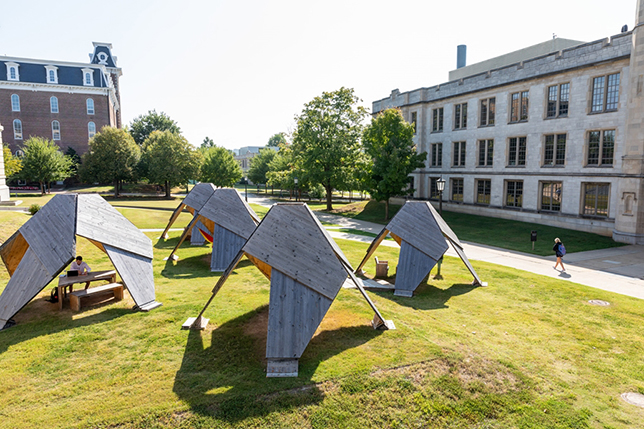
Cross-laminated timber pavilions at Vol Walker Hall on the campus of the University of Arkansas.
Photo by Chieko Hara
In 2007, the university signed onto the American College and University Presidents' Climate Commitment, which is now overseen by nonprofit Second Nature. Eventually, the institution established the goal of net carbon neutrality by 2040. The campus plans to reduce its carbon footprint through "a combination of sustainable building practices, energy efficiency upgrades and sustainable commuter transportation options." As of 2021, the campus carbon footprint is near 1990 emission levels and has decreased over the past decade even as both enrollment and built space have increased.
Most recently, Chancellor Joe Steinmetz joined the leaders of 74 other U.S. colleges and universities to push the Biden Administration to adopt a target of at least 50 percent reduction in carbon emissions by 2030.
Speaking of his own institution's efforts, Steinmetz noted, "This project will not only help the University of Arkansas campus become more energy efficient, but it will also provide another example of our commitment to leading the way in supporting environmentally beneficial projects that also make good financial sense."
About the Author
Dian Schaffhauser is a former senior contributing editor for 1105 Media's education publications THE Journal, Campus Technology and Spaces4Learning.