Nureva Adds Voice Amplification to In-Classroom Audio Systems
Audio conferencing solutions company Nureva Inc. recently announced that it has added a Voice Amplification Mode to two of its audio conferencing systems. The addition to the HDL300 and Dual HDL300 systems will support both in-room amplification of the instructor’s voice as well as full-room pickup of other voices in the classroom for the sake of remote students. The technology is currently available in public beta, and it is available for both K–12 and higher education spaces.
“Instructor voice amplification is required in many classroom scenarios, but in today’s modern classrooms, it needs to be flexible enough to involve remote students,” said Nureva CEO Nancy Knowlton. “The addition of this feature to Nureva audio systems will give educators the multifunction solution they’ve been looking for.”
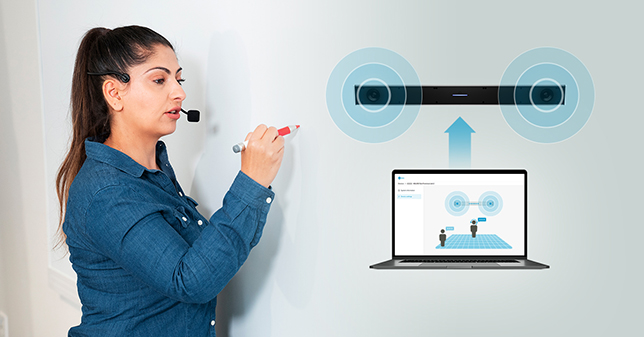
The voice amplification feature uses Nureva’s patented Microphone Mist technology to ensure full functionality across all combinations of in-class, remote, and hybrid learning models. It is currently available to existing HDL300 and Dual HDL300 customers through the Nureva Console. Instructors can use a personal headset microphone to amplify their voices through the in-class speakers, and their voices are also picked up via UC&C clients like Microsoft Teams. This dual pickup is available through a single system.
The feature is expected to be generally available by early fall of this year.
About the Author
Matt Jones is senior editor of Spaces4Learning. He can be reached at [email protected].