Overly Door Company Introduces Taller Option

Overly Door Company in Greensburg, Pa., recently announced that it has introduced a larger version of its Wood Acoustic Door. Previously, the original maximum size was four feet wide and eight feet tall. This new option, the Tall Wood Acoustic Door, measures four feet wide and ten feet tall for all models 1-3/4” thick—as well as for the STC 50 model, which measures 2-1/4” thick.
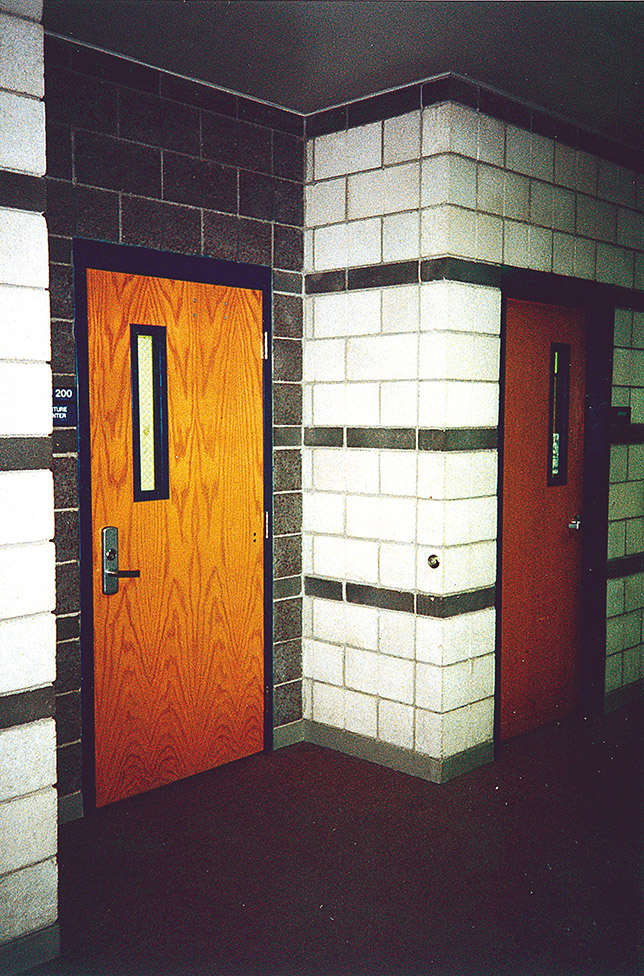
Overly Tall Wood Acoustic Door

The product is UL fire rated for 45 minutes according to UL Standard for Safety 10C, according to a press release. Other features include dual glazed vision lights, level swing hinges with fully mortised automatic door bottoms and Overly Cam-Lift Hinges with Super H door bottoms.

Overly offers FSC and non-FSC wood veneers, both traditional and exotic, finished in customized colors according to individual project needs. Non-traditional options include plastic laminates. Visit the Overly website for more information.

About the Author

Matt Jones is senior editor of Spaces4Learning. He can be reached at [email protected].

Featured

  • LAN, Inc. Opens Office in College Station, Texas

    Lockwood, Andrews & Newnam, Inc. (LAN) recently announced the opening of a new office in College Station, Texas, to support its regional client base, according to a news release. The organization provides engineering, design, and program management services for water, wastewater, transportation, stormwater, and education clients in the Brazos Valley.

  • Kimball International Releases Curated Design Support Program

    Commercial furnishings company Kimball International recently announced the launch of a new end-to-end design support program, DesignSuite. According to a news release, its goal is to guide architecture & design professionals and dealer partners through the process from vision to specification.

  • Geometric abstract school illustration

    How Design Shapes Learning and Success

    Can the color of a wall, the curve of a chair, or the hum of fluorescent lights really affect how a student learns? More schools are beginning to think so.

  • Pitzer College

    Designing for Change in Higher Ed Learning Environments

    Higher education will continue to evolve, and learning environments must evolve with it. By prioritizing adaptable infrastructure, thoughtful reuse, strong energy performance, and wellness-centered design, campuses can create spaces that support learning today while remaining flexible for the future.