Overly Door Company Introduces Taller Option

Overly Door Company in Greensburg, Pa., recently announced that it has introduced a larger version of its Wood Acoustic Door. Previously, the original maximum size was four feet wide and eight feet tall. This new option, the Tall Wood Acoustic Door, measures four feet wide and ten feet tall for all models 1-3/4” thick—as well as for the STC 50 model, which measures 2-1/4” thick.
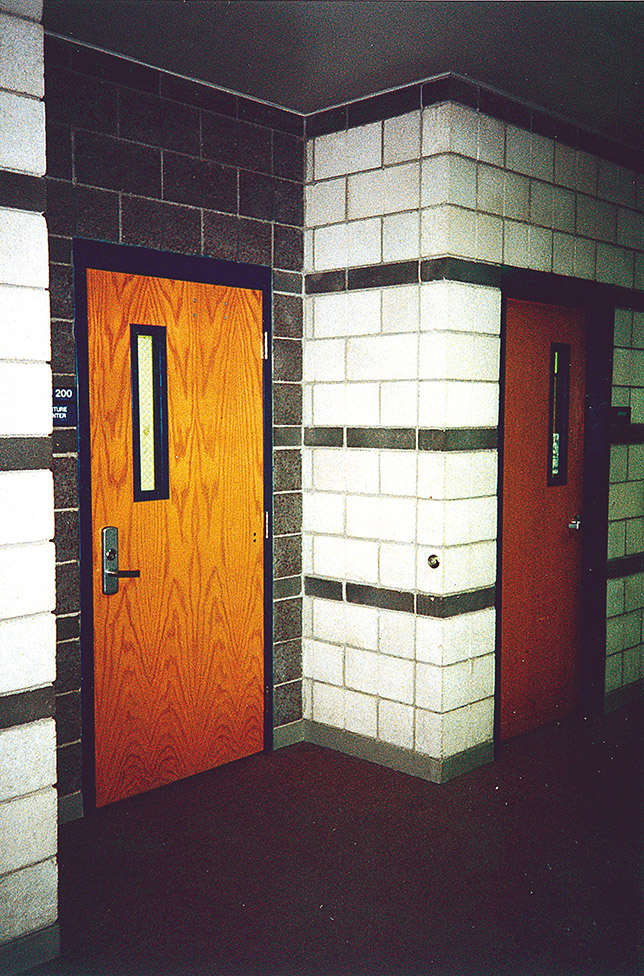
Overly Tall Wood Acoustic Door

The product is UL fire rated for 45 minutes according to UL Standard for Safety 10C, according to a press release. Other features include dual glazed vision lights, level swing hinges with fully mortised automatic door bottoms and Overly Cam-Lift Hinges with Super H door bottoms.

Overly offers FSC and non-FSC wood veneers, both traditional and exotic, finished in customized colors according to individual project needs. Non-traditional options include plastic laminates. Visit the Overly website for more information.

About the Author

Matt Jones is senior editor of Spaces4Learning. He can be reached at [email protected].

Featured

  • Abstract tech network data connections with orange, blue glowing dots, lines

    3 Trends for Higher Education to Stay Ahead of in 2026

    As universities enter the new year, the question is no longer whether digital transformation is necessary, but how quickly institutions can convert technological potential into strategic advantage.

  • Beyond Four Walls

    Operable glass walls provide a dynamic solution for educational spaces. They align with today’s evolving teaching methods and adapt to the needs of modern learners. Beyond the functional versatility, movable glass walls offer clean, contemporary aesthetics, slim and unobtrusive profiles, and versatile configurations that cater to the evolving needs of students and educators alike.

  • classroom with crystal ball on top of a desk

    Call for Opinions: Spaces4Learning 2026 Predictions for Educational Facilities

    As 2025 winds to a close, the Spaces4Learning staff is asking its readers—school administrators, architects, engineers, facilities managers, builders, superintendents, designers, vendors, and more—to send us their predictions for educational facilities in 2026.

  • concentric silhouettes of a human head

    How Physical Space Shapes the Mind: Designing for Better Learning Outcomes

    Research in environmental psychology and neuroscience increasingly suggests that the way a room is designed can influence memory, focus, or even a student's sense of belonging.

Digital Edition