Overly Door Company Introduces Taller Option

Overly Door Company in Greensburg, Pa., recently announced that it has introduced a larger version of its Wood Acoustic Door. Previously, the original maximum size was four feet wide and eight feet tall. This new option, the Tall Wood Acoustic Door, measures four feet wide and ten feet tall for all models 1-3/4” thick—as well as for the STC 50 model, which measures 2-1/4” thick.
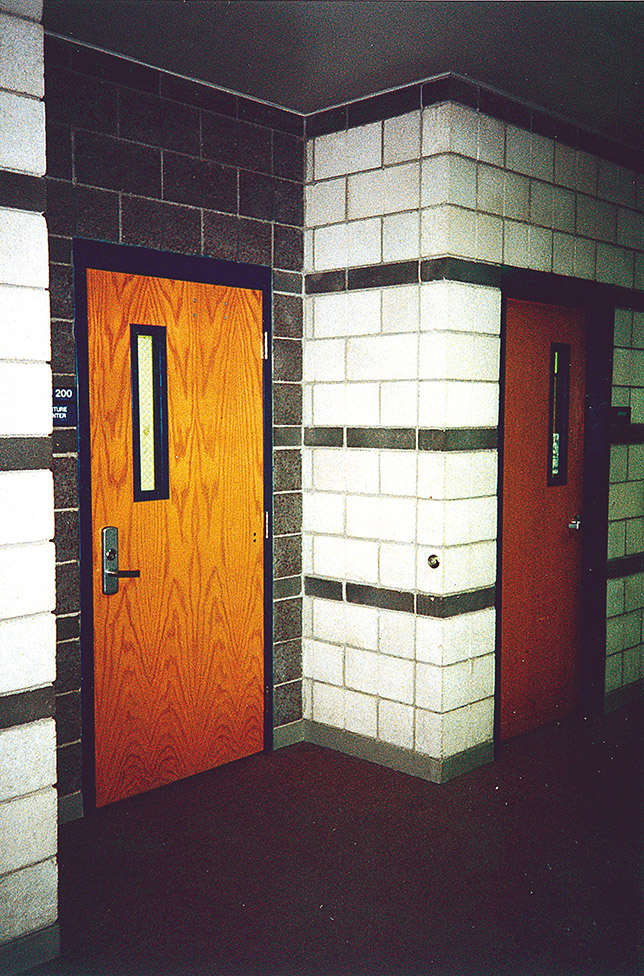
Overly Tall Wood Acoustic Door

The product is UL fire rated for 45 minutes according to UL Standard for Safety 10C, according to a press release. Other features include dual glazed vision lights, level swing hinges with fully mortised automatic door bottoms and Overly Cam-Lift Hinges with Super H door bottoms.

Overly offers FSC and non-FSC wood veneers, both traditional and exotic, finished in customized colors according to individual project needs. Non-traditional options include plastic laminates. Visit the Overly website for more information.

About the Author

Matt Jones is senior editor of Spaces4Learning. He can be reached at [email protected].

Featured

  • Utah Valley University Opens New Engineering Building

    Utah Valley University in Orem, Utah, recently held a grand-opening ceremony for the new Scott M. Smith Engineering Building, according to a news release. The facility is one of the largest engineering buildings in the state at almost 200,000 square feet, and it plays home to the university’s Smith College of Engineering and Technology (SCET).

  • LAN, Inc. Opens Office in College Station, Texas

    Lockwood, Andrews & Newnam, Inc. (LAN) recently announced the opening of a new office in College Station, Texas, to support its regional client base, according to a news release. The organization provides engineering, design, and program management services for water, wastewater, transportation, stormwater, and education clients in the Brazos Valley.

  • Different Starting Points, Same End Goal

    Higher education campuses can enhance student experience by implementing mobile credentials to streamline building access, on-campus payments, and access to other amenities. This enables students to connect to their campuses through the technology they use most: their mobile devices.

  • Spaces4Learning Trends & Predictions for Educational Facilities in 2026: Part I

    We asked, you answered, and the results are in! Last year, we put out a call for submissions to collect our readership’s opinion on trends and predictions for K–12 and higher education facilities in 2026.