University of Florida to Start Construction on New Agricultural, Engineering Building
The University of Florida in Gainesville, Fla., recently announced that it will soon begin construction on a new academic building for the department of agricultural and biological engineering (ABE), according to a news release. The W.W. Glenn Teaching Building is scheduled to begin construction by the end of 2024 and finish by August 2025, in time for the new academic year.
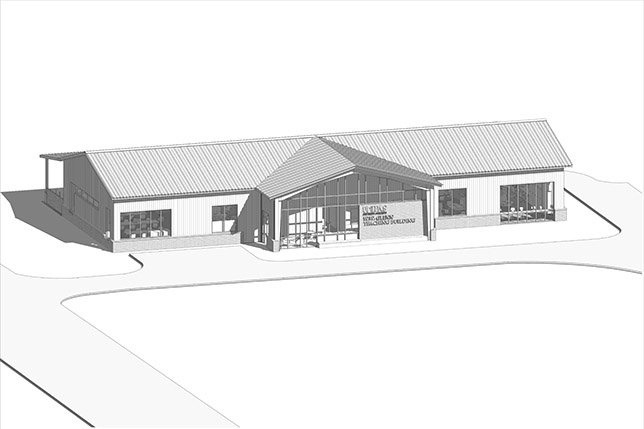 Image courtesy of University of Florida
The new facility will cover 7,200 square feet, more than twice that of the existing ABE building. The facility will include a mechanical workshop and an engineering design workshop, among other amenities.
“The new building will provide our students with state-of-the-art, hands-on learning experiences to further explore technology, innovation and creative design, preparing them to be our future problem-solvers for agricultural and natural resource challenges,” said ABE chair Kati Migliaccio.
The building was funded through donations from the university community. It was named after UF graduate and University of Florida Institute of Food and Agricultural Sciences (UF/IFAS) Extension agent W.W. Glenn, whose family provided financial support to the project.
“These extremely generous gifts will enable us to train the next generation of leaders to help natural resources and the environment in Florida, as well as the world as it continues to grow and change,” said Daniel Hofstetter, a university assistant professor in agricultural construction and maintenance, at the groundbreaking ceremony. “Today, we're not only breaking ground for a new building, but we’re also breaking barriers in our teaching program.”
About the Author
Matt Jones is senior editor of Spaces4Learning. He can be reached at [email protected].