From Shadows to Sanctuary: The Transformation of Light at Countway Library
The renovation of Countway Library at Harvard Medical School demonstrates how biophilic design and advanced lighting strategies transformed a formerly dark, insular space into a vibrant, welcoming hub that supports wellness, learning, and community engagement.
- By Kalyn Pavlinic, IIDA, Josh Feinstein, Carol Williams, LC, IES
- 12/18/25
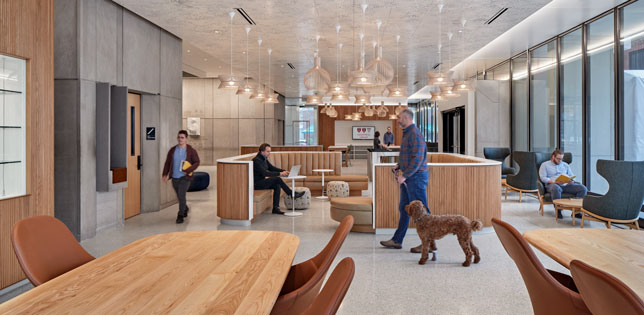 Countway Library at Harvard Medical School (Photo: Robert Benson Photography)
Good lighting design is at its best when it goes unnoticed; when illumination quietly elevates a space, delighting people without drawing attention to itself. While much has been said about natural light and its benefits for human health, artificial light has as much opportunity to help or hurt building occupants. Lighting buildings in support of greater wellness strategies — from accommodating neurodivergent and visually impaired building users to lighting that mimics natural daylight to support circadian rhythms — is a critical piece of design. This is often supported by layered approaches, which combine task, accent, and ambient lighting to create zones and signal types of usage.
The lighting design of the Countway Library at Harvard Medical School is a fascinating study in how architectural design and site context can significantly influence the quality of light within a building.
Architectural Design and Site Context Before Renovation
The Countway Library, designed by Hugh Stubbins in 1965, was conceived as a limestone-clad monolith situated atop an abandoned street and encircled by a recessed plaza. This design effectively isolated the library from the surrounding campus and community, creating a sense of division and separation. The Brutalist architecture, characterized by an austere, imposing presence, reflected a design philosophy that projected permanence and preservation — a building designed for books rather people. The result was an institutionally protective shell that many experienced as dark and insular.
Inside, the lighting strategy reinforced the building's introverted character. The recessed plaza and inward-facing orientation allowed little natural light to enter, a condition further compounded by minimal windows and heavy, opaque materials that suppressed brightness. As a result, interior spaces were dim and reliant on artificial systems that, while functional, did little to enrich the environment. Rather than creating a warm or uplifting atmosphere for people, the lighting underscored utility over comfort, reflecting an overall design approach that prioritized the preservation of books above human experience.
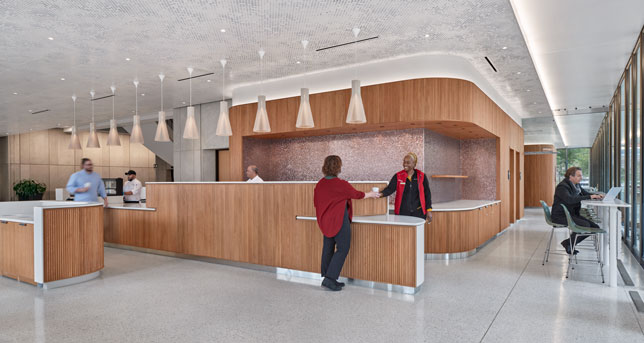 Countway Library at Harvard Medical School (Photo: Robert Benson Photography)
Architectural Design and Site Context After Renovation
The recent renovation of the Countway Library aimed to transform the building from an insular repository of collections into a dynamic hub of 21st-century learning and community engagement. The renovation project, led by Shepley Bulfinch, focused on reimagining the library — which the same firm had also renovated in 1998 — as a multifaceted space that supports learning, research, community building, and student well-being.
One of the key goals of the renovation was to replace division with connection. A new pedestrian bridge to Huntington Avenue and gracefully integrated ramps restored the library's link to the Longwood Medical Area. This reconnection to the surrounding community was a crucial step in creating a more open and inviting atmosphere within the library.
The lighting design of the renovated Countway Library is a testament to the power of thoughtful architectural design and site context in enhancing the quality of light within a building. The renovation project incorporated several strategies to optimize natural light and create a warm, welcoming environment.
Biophilic Design Strategies
Biophilic design, an approach that connects people with nature through light, material, and form, was employed to optimize natural light and comfort within the library. The introduction of new curved, wood-clad forms, organic textures, and a nature-inspired palette helped to soften the brutalist edges of the original design, infusing the library with warmth. These design elements not only improved the aesthetic quality of the space but also enhanced the distribution of natural light throughout the interior.
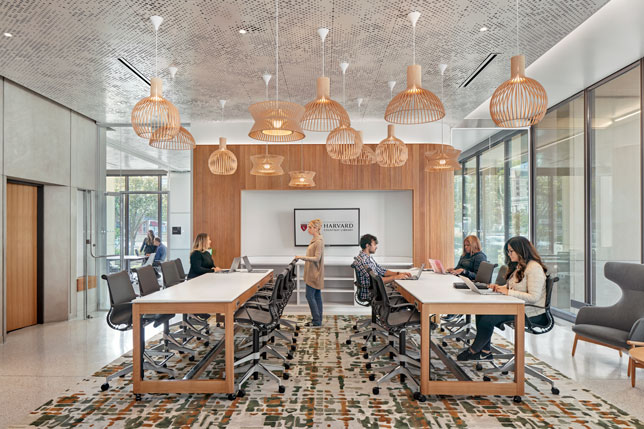 Countway Library at Harvard Medical School (Photo: Robert Benson Photography)
Maximizing Natural Light
One of the primary goals of the renovation was to maximize the amount of natural light entering the library. The design team achieved this by opening up the first floor, removing interior partitions and filling it with collaborative and community-building activities. This open floorplan allowed natural light to penetrate deeper into the building, creating a brighter and more inviting atmosphere.
The renovation also emphasized reconnecting patrons with daylight and views. Large windows and glass facades were exposed to bring in ample natural light and to frame visual connections to the surrounding campus. Patron spaces were intentionally placed along these windows to take advantage of daylight and exterior views, reinforcing comfort and engagement.
Library functions and activities were strategically programmed to maximize the amount of daylight, reducing the need for artificial lighting during the day. The use of reflective and textured surfaces further enhanced the distribution of natural light, creating a dynamic and visually engaging environment.
Artificial Lighting Systems
While natural light was a primary focus of the renovation, the design team also implemented advanced artificial lighting systems to ensure consistent illumination throughout key areas of the library, including meeting rooms, collaborative spaces, the café, and seating/study areas. The artificial lighting systems were carefully integrated into the architectural design to create a seamless and cohesive lighting scheme. The use of layered lighting, including ambient, task, and accent lighting, allows for flexibility in how different areas of the library are illuminated. This flexibility is particularly important in a multifunctional space like the Countway Library, where different activities and tasks require varying levels and types of lighting.
These lighting strategies are increasingly preferred in libraries, educational, and even commercial environments, where there is a growing emphasis on creating adaptable, user-centric spaces. In these settings, the integration of layered and indirect lighting not only improves visual comfort and energy efficiency but also enhances the overall aesthetic, supporting the move toward multifunctional spaces that prioritize both functionality and experience. By using lighting to subtly guide the atmosphere of different zones, these environments foster better engagement, productivity, and well-being.
The approach at Countway Library was designed to be energy-efficient, providing high-quality light that enhances the user experience. The light design strategy helped the renovation meet Harvard's Green Building Standards for Healthy Materials, adheres to the Healthier Hospitals initiative for furniture, and supports the Library's Healthcare Without Harm Initiative in furnishings and design.
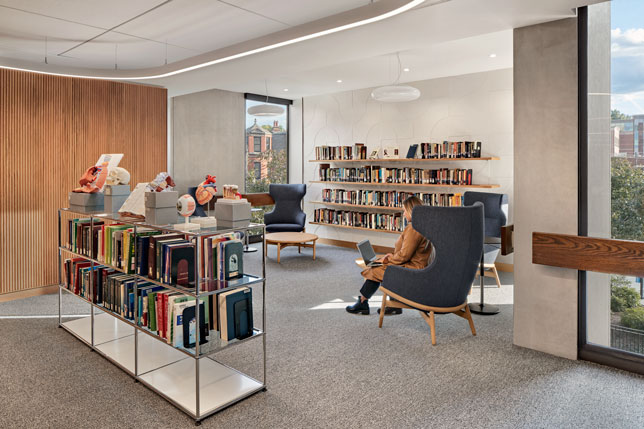 Countway Library at Harvard Medical School (Photo: Robert Benson Photography)
Enhancing Well-Being
The thoughtful lighting design of the renovated Countway Library has had a profound impact on the user experience. The combination of natural and artificial lighting creates a bright, welcoming, and comfortable environment that supports the diverse needs of the library's users. Additionally, it has been shown to have a positive impact on the mental and physical health of the library's users. Post-occupancy surveys revealed that users describe the new library as "a place where I feel less stressed and safe." The increase in daily turnstile counts from 250 to over 1,500 visitors every day is a testament to the success of the renovation in creating a nurturing, community-focused environment.
Supporting Learning and Research
The dynamic lighting design of the Countway Library supports its mission of service, education, and research. Key areas, including a state-of-the-art maker space and new amenities like event rooms, café, and bookstore, are all enhanced by the high-quality lighting, which plays a vital role in supporting its mission of service, education, and research. Carefully integrated into the architectural layout, the lighting system creates a seamless and cohesive scheme that enhances the functionality of technology-rich spaces.
Lighting techniques such as cove lighting, indirect fixtures, low-glare downlights, and sophisticated pendant forms have been strategically employed to provide the light levels required for different activities, while being discreet when necessary. This adaptability is particularly crucial in multifunctional spaces like the Countway Library, where the lighting must adjust to suit individual study, group collaboration, and larger events, ensuring that each area is optimally illuminated based on its specific function.
The flexible lighting systems allow for easy transitions between individual study, group work, and larger events or programs, ensuring that the library can adapt to the changing needs of its users over time. The use of long-lasting sustainable LED source lighting ensures that maintenance will be kept to minimum, and quality stays consistent over time.
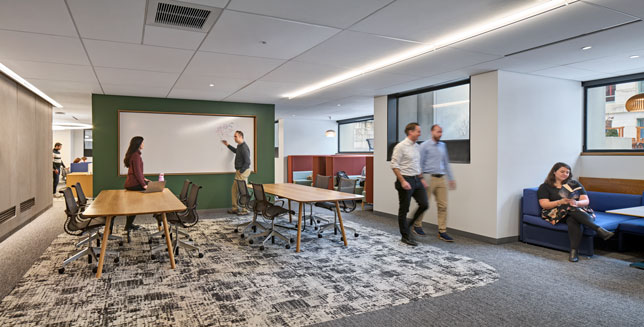 Countway Library at Harvard Medical School (Photo: Robert Benson Photography)
Conclusion
The lighting design of the Countway Library at Harvard Medical School is a prime example of how architectural design and site context can significantly influence the quality of light within a building. The thoughtful renovation of the library has transformed it from a dark and insular space into a bright, welcoming, and dynamic hub of learning and community engagement. Prioritizing natural light, incorporating biophilic design strategies, and implementing advanced artificial lighting systems has created an environment that enhances the well-being and productivity of its users. The success of the renovation is evident in the positive feedback from users and the increased daily visitor counts, demonstrating the profound impact that thoughtful lighting design can have on a space.