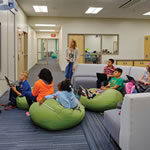
How technology supports flipped classrooms.
What will the 21st-century learning environment look like?
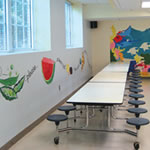
Making the most of available space by gong underground.

Technology tools in the classroom continue to advance, providing not only innovation, but more importantly, functionality.
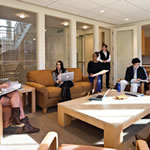
Rethinking the good, the bad, and the ugly of flexible learning spaces.
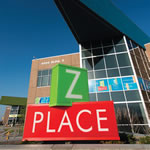
Innovative E-12 campus targets early childhood development.
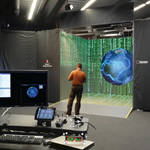
A variety of technology options are ensuring that science, technology, engineering and mathematics (STEM) students receive the best training and real-world experience before embarking on their careers.
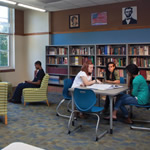
Three strategies are essential when creating successful classrooms and collaborative spaces.
Despite the fundraising challenge that confronts any two-year, private college, the ensuing capital campaign for Spartanburg Methodist College (SMC) proved successful and led to Ellis Hall being built and dedicated last November (2012). The facility was the first new academic building on the 110-acre campus since 1967. The 48,000-sq.-ft. building increased the College’s academic space from 15 to 29 percent of the total physical plant. SMC’s seven student residence halls account for most of the balance. SMC’s administration can focus next on upgrading existing buildings.
Traditional schools were designed when the primary mode of teaching was distributive; teachers provided information and students were responsible for memorizing and repeating the information. All classrooms were identical marching down each side of identical corridors.