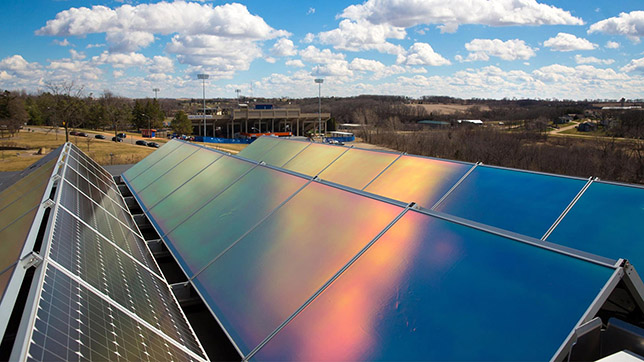
The University of Wisconsin-Platteville has received approval from the state to erect a 2.4-megawatt solar array on its campus. According to the university, this will be the largest solar array owned by a Wisconsin state agency and will make the campus the sixth-highest on-site producer of renewable energy in the country among institutions of higher education.
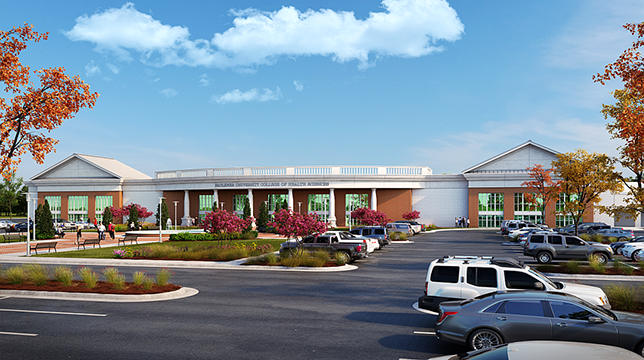
Faulkner University in Alabama is creating a new College of Health Sciences out of a former Burlington Coat Factory building. The work began last summer, after university President Mike Williams announced the planned conversion of a 13-acre shopping center and the empty Burlington building into a facility that would house all of Faulkner’s health science programs.
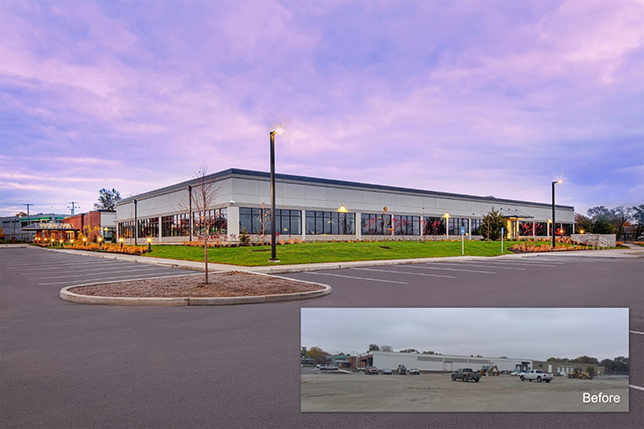
A project to reconsider how space was used for medical education that began six years ago is progressing at the Washington University School of Medicine in St. Louis. KWK Architects has repurposed a 7.8-acre industrial site and warehouse off-campus into new office space for the school.

Construction of a new solar project at New Mexico State University began this week. The university has partnered with El Paso Electric (EPE) on the initiative that they call Aggie Power, which should be sufficient to power about one-third of the 900-acre NMSU campus in Las Cruces.
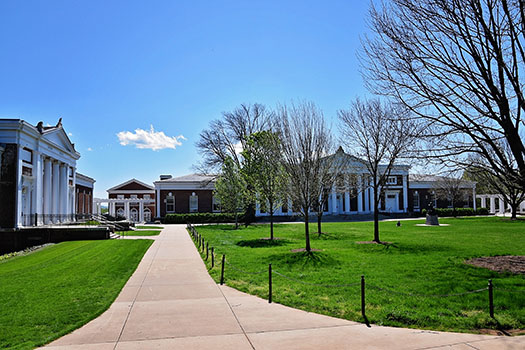
The University of Virginia reported 121 new cases of COVID-19 on Monday, Feb. 15, and 229 new cases on Tuesday, Feb. 16. The university has announced a new set of health and safety regulations that are set to last through at least Friday, Feb. 26.

A series of winter storms blew through the U.S., bringing record-breaking low temperatures and leaving millions without electricity. In response, many universities are setting up warming stations to give both students and the community at large a place to take refuge against the cold.
One of the nation’s top priorities is to be able to safely reopen schools for in-person learning. The CDC has recently recommended ultraviolet germicidal irradiation (UVGI) as a means for disinfecting shared spaces, especially those where ventilation is limited. UVC (ultraviolet-C) light has been proven to help deactivate SARS-CoV-2, the virus that causes COVID-19.
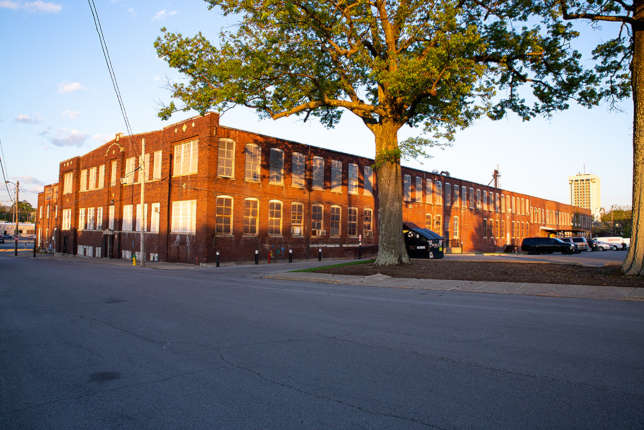
The University of Kentucky has revealed the plans for its new College of Design (CoD). The institution intends to renovate a century-old tobacco warehouse and turn it into a "vibrant and interactive learning space for design students." The design was done by Studio Gang, in collaboration with Louisville-based architect-of-record K. Norman Berry Associates (KNBA).

Engineering researchers at Purdue University have come up with sensors that can determine concrete strength onsite in real-time, and they're testing it right on campus. The hope is that the technology will help builders speed up their construction timelines safely.

Morehead State University in Kentucky has taken delivery of a second space antenna. The 12-meter tracking antenna was delivered to the university by NASA Deep Space Network operated by the Jet Propulsion Laboratory. There, it will serve as satellite tracking station for low Earth orbiting (LEO) satellite mission support and as a training facility for students studying in the space systems engineering, astrophysics and astronomy programs.
A Virginia institution is the latest school to cover all of its electricity needs with a more sustainable source. The University of Richmond (UR) has joined campuses in Colorado, Hawaii and Minnesota to match 100 percent of its electricity usage with solar power.
Harvard University has invested in four electric buses, representing nearly a third of its fleet. The vehicles will replace four similarly-sized bio-diesel vehicles already operating on campus. Each of the new buses, from Proterra, is 35 feet long (similar in size to the current buses), has a seating capacity of 29 and runs on a 450-kWh battery.
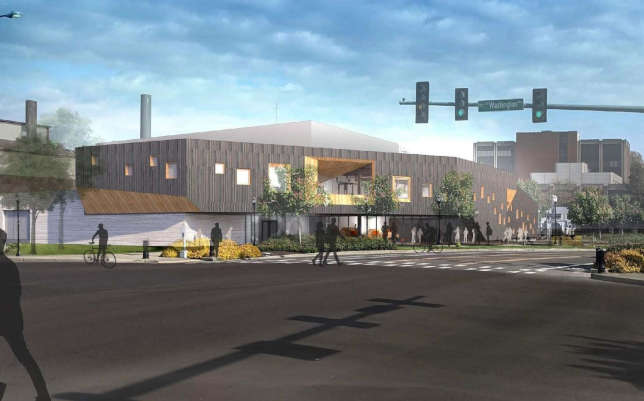
Oregon State University in Corvallis will be getting a new Arts and Education facility. The university's board of trustees recently approved construction of the $70 million complex, which will host performing arts classes, programs and performances on the campus in a 500-seat concert hall.
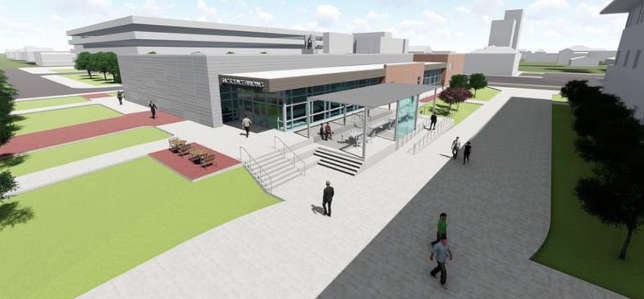
San Antonio College is funding construction of a new $13 million science building from a $83 million bond approved by county voters in 2017.
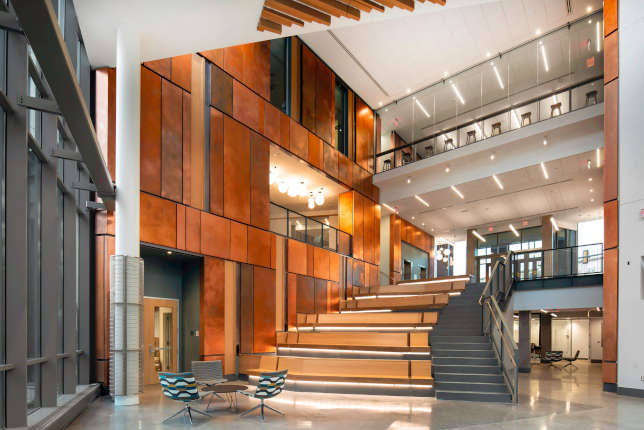
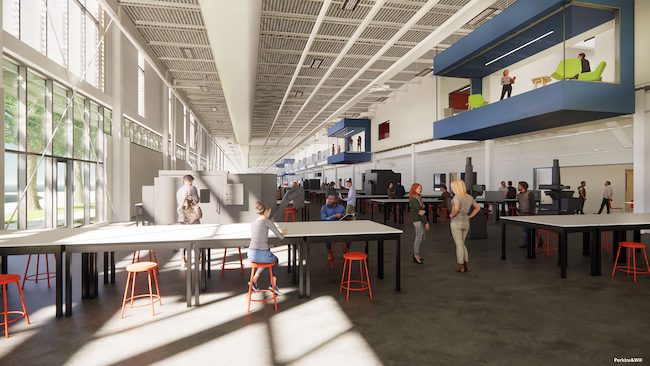
According to the university, the 133,000-square-foot building is intended to support advanced research and economic development initiatives with a design that emphasizes makerspaces, collaborative research facilities and flexible gathering areas.

It will be critical for institutions to look at new ways to generate revenue and reduce expenses that are sustainable and effective. There are several initiatives that institutions can consider or implement in response to the crisis.
A company that provides "contactless" on-demand laundry and dry-cleaning services has announced a surge of business from colleges and universities, to address the needs of students who are in quarantine or isolation while living on campus.
Two universities are working together to figure out how to make energy generation, storage and system operation more efficient and reliable, especially in "microgrid" settings.
A five-campus college in Scotland has distributed a new virtual desktop for its construction students to allow them to work on industry-grade software from home.
A $5.8 million sustainability project to convert steam plumbing to hot water plumbing recently completed the first of eight phases at Wesleyan University.
University researchers will be studying how to reduce waste in the construction industry, thanks to a grant from United Kingdom Research and Innovation, a public body that supports research and knowledge exchange in higher education.
A community college in southwest Missouri has just broken ground on a new facility to house advanced manufacturing education programs.
Georgetown University has taken the next step in its commitment to sustainability by committing to obtaining two-thirds of its total electricity consumption directly from "local" solar farms in Maryland and New Jersey.

Ishita Banerjii, project architect at Hollis + Miller, discusses Kansas State University’s new multicultural student center. The building, dedicated to advance student diversity, features various gathering spaces like dance studios, huddle rooms, and a commercial kitchen.

COVID-19 has changed and will continue to change every aspect of education in K–12 and higher education for the foreseeable future. We polled our readership to learn of the experiences taking place across the nation and get a glimpse of what's being planned going into the spring 2021 semester and beyond.
HEMCO, a laboratory equipment manufacturer, released its CleanAire II Ductless Hoods. The hood is designed to meet DH I requirements as defined by SEFA 9.

In this episode of Schools In Focus, Turan Duda and Jeff Paine, founding principals of Duda|Paine Architects, discuss how architectural design is shifting to better address the mental and physical health needs of students.
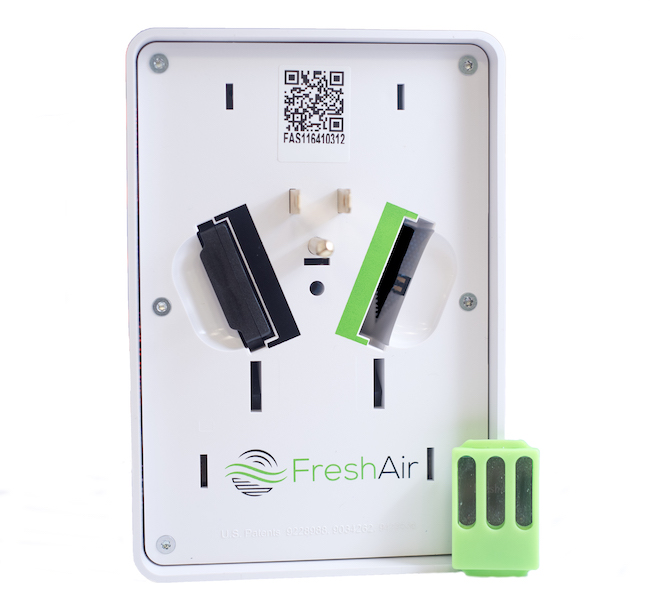
The FreshAir1 Smoking Detection System is capable of monitoring up to 500 square feet and is suited for educational facilities to enforce no-smoking policies.
Colorado State University signed a deal that will move the Fort Collins institution closer to its goal of shifting all of its energy needs to renewable electricity by 2030.
Construction workers are five times more likely to be hospitalized with COVID-19 than other kinds of workers.
An education technology company better known for its payment solutions is promoting functionality within its software to help schools manage the number of students allowed in a specific space.
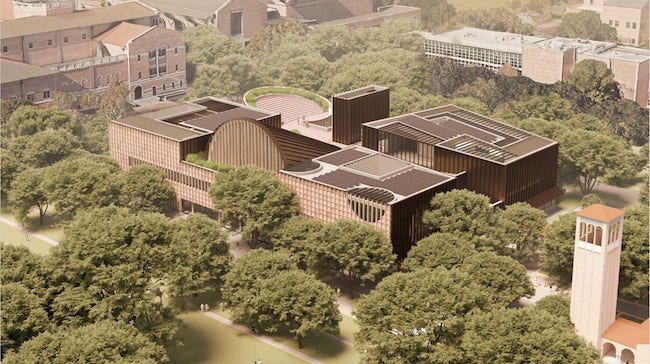
The structure will include a multicultural center and a rooftop auditorium and will largely replace the campus' Rice Memorial Center.

The Cleaning Industry Research Institute (CIRI) will host a three-part webinar series called “COVID-19: The Second Wave,” beginning Thursday, Nov. 12.
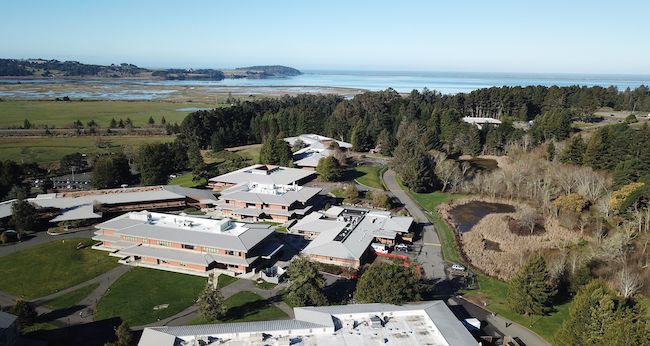
A community college in northern California has projected a savings of $4.2 million over the next 20 years from an implementation of solar.