Demand Response
IMAGES COURTESY OF TROY AND BANKS
The Virginia Department of Mines, Minerals and Energy expects over 120 participants in the 2014 Demand Response Energy Curtailment Program. In 2006, Loudoun County school district was the first public school division in Virginia to participate in the PJM Economic Load Demand Response Program. As a result of the revenue procured from successful participation by Loudoun County, the program has become a popular option to generate income for many public government entities. In Virginia, Chesapeake Public Schools and Virginia Beach Public Schools are two of the larger school divisions that are currently participating in the Demand Response Program. The energy reduction program consists of the participant’s ability to reduce electricity consumption when the demand on the electrical grid is greater than the available electricity. Curtailment providers have paid an estimated $7-million dollars to participating state agencies and local governments since 2006.
Many localities and school divisions opt to participate in the Economic Demand Response Program, in lieu of the mandatory Emergency Demand Response Programs. The voluntary program, which runs from June through September, is tested within this four-month window. This test event allows participants to measure the amount of electrical load they can shed with the criteria that has been predetermined by the curtailment provider. When an energy event on the grid occurs, the school system voluntarily works to curtail electricity usage during the established timed event. Once the event occurs, the school division reduces the expected load to the committed level. The school division is then financially compensated for their kW reduction.
For example, on Aug. 20, 2014, a public school district in Virginia successfully participated in the Demand Response Energy Reduction Test Program. Thirteen secondary schools were asked to reduce overall power consumption for two hours in order to meet the energy reduction criteria for participation in the program. The power reduction was achieved by using two different protocols. Three schools were powered down by simply modifying the HVAC schedule to an unoccupied set back schedule, while the other 10 schools were totally powered down. In those schools that were “powered off”, school maintenance had the opportunity to test emergency systems. Generators and emergency lighting were evaluated by technicians that were assigned to each school during the practice event in order to determine the adequacy of the systems.
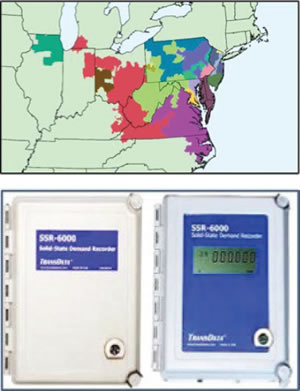
There are some conditions to consider prior to enrolling in an energy curtailment program. First, is the selection of an energy curtailment provider. The curtailment service provider will work with the Regional Transmission Organization (RTO) to coordinate the wholesale exchange of electricity, data management and metering requirements. In Virginia the PJM Interconnection is the main electrical grid for an area of 13 states.
If your school division has integrated IDR meters to monitor periodic energy data, you are ahead of the process. In addition to IDR meters, curtailment providers install additional metering to confirm participants are meeting the reduction requirements. The service provider you select will have the capability to monitor all of your schools and support sites when a test or demand response event occurs. Progress is examined through a web-based product. Your revenue is determined by your ability to reduce demand as monitored by the metering devices.
Successful participation in the program may involve out-of-pocket expenses. These costs may vary and the program may create additional revenue for energy projects. Energy stewardship projects such as LED lighting conversion, solar panels, rainwater harvesting systems and outdoor living classrooms are a few options for school divisions to consider. Demand Response is a dynamic initiative that can benefit your school division by curtailing energy and generating revenue.
This article originally appeared in the issue of .
About the Author
John A. Bailey, Ph.D. is the director of School Plants for Chesapeake Public Schools and a National School Plant Managers Association board member, representing Virginia, and a Virginia School Plant Managers Association board member, representing Region II, in Virginia.