Floor Maintenance Made Easy
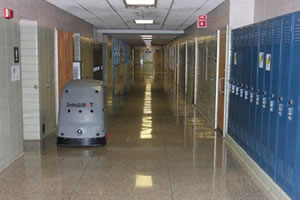
Diversey’s TASKI Intellibot DUOBOT 1850 streamlined the floor cleaning process for the Upper Merion School District.
Without proper maintenance, floor finish can lose its glossy appearance and the ability to protect floors over the long term. Today, many schools must carefully balance their budget with the desire to have clean floors that can withstand heavy foot traffic from students, faculty and visitors.
Upper Merion School District, located outside of Philadelphia, has over 830,000 square feet of flooring, and a variety of floor types including cement terrazzo, epoxy terrazzo and vinyl composition tile. In 2006, the cleaning staff consisted of 37 people, including two floor care specialists who oversaw weekly burnishing using propane burnishers.
Following the economic downturn, weekly burnishing was not economically feasible and several positions were reassigned or eliminated to cut costs. In 2015, with fewer staff members, the district sought a cost-effective, efficient and sustainable way to keep floors looking their best in between burnishing.
“Through equipment we can increase efficiency despite having fewer members on staff,” says William Dillon, custodial coordinator, Upper Merion School District. “
For years, the district has used floor cleaners from Sealed Air’s Diversey Care division, as well as its TASKI Intellibot DUOBOT 1850 robotic sweeper/scrubber and the Intellibot SWINGOBOT 1650 to maintain floors. Thus, it was a natural next step to incorporate TASKI IntelliPad, Diversey Care’s two-in-one floor care pad that both cleans and burnishes.
“We have been using the 15-inch IntelliPads with our SWINGOBOT and have ordered 19-inch pads for our walk behind floor scrubbers following the positive response from cleaning staff and higher-ups in the district,” adds Dillon. “There’s no training required; it’s as simple as putting the pad on the machine and witnessing the floor’s shine increase after each use.”
“With Diversey Care’s portfolio of floor care solutions, we’ve overcome our cleaning challenges and are now ahead of the curve and able to maintain continuity.”
www.diversey.com
This article originally appeared in the issue of .