School Enjoys Benefits of Rubber Flooring
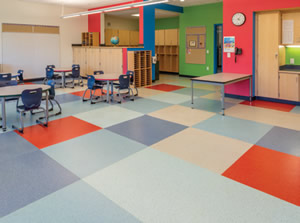
nora rubber flooring gives Christa McAuliffe Elementary School increased durability and stain resistance when it comes to their flooring, adding to a true 21st-century learning environment.
Christa McAuliffe Elementary School in Concord, N. H., is one of three new, futuristic elementary schools designed to meet the changing needs of 21st-century learning. The school understands the evolution of the library and incorporates a variety of mediums and methods of consuming information. Throughout the facility, norament grano premium rubber flooring supports open, collaborative, flexible and technology-integrated multi-use learning spaces.
“The facility is not only an elementary school but also a community building that’s heavily used before and after school for several town programs,” says Matt Cashman, director of facilities & planning. “The durability and increased stain resistance—without the use of chemical cleaners or coatings—is a huge benefit when compared to our previous dealings with VCT.”
The selection of nora flooring also helped the district meet Northeast-CHPS standards of sustainability. “The elimination of coatings and chemicals has been a breath of fresh air, literally,” says Rusty Bonner, head custodian. The absence of fumes often associated with these substances has positively impacted the well-being of the maintenance staff, as well as students and teachers.
“Just a few regular washes with little more than water erases any staining, allowing the floors to easily maintain their new appearance,” says Bonner. “It’s an easy-maintenance flooring,” he continues. “As a result, we can devote more time to cleaning alternate surfaces, such as glass.”
The rubber flooring also enhances acoustics. Open project areas, including an amphitheater, circular story room, reading nooks and spaces for collaboration, benefit from the floor’s ability to attenuate unwanted ambient noise, allowing everyone to better focus on learning.
www.nora.com
This article originally appeared in the issue of .