Groundbreakings Kick off School Projects for Belton ISD
This week teachers, students and administrators held a groundbreaking to celebrate the start of construction for the new Charter Oak Elementary School. When completed for the 2019 start of classes, the new 82,300 square-foot Charter Oak Elementary School will have capacity for 800 students.
The new school will be a flexible and adaptable 21st century learning environment, based on the building program developed through the collaboration between Belton ISD in Texas, and O’Connell Robertson. In addition to general and special education classrooms, students will enjoy specialty flex classrooms that offer art, music and computer stations.
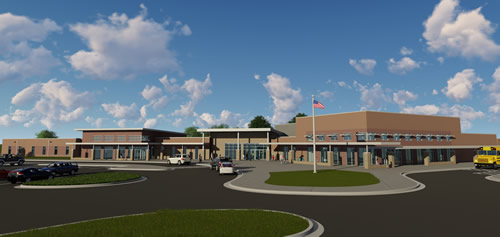
Charter Oak was selected as the name to commemorate a historic event in Belton history, where, under a live oak tree, Bell County held its first election in 1850. The live oak tree still exists today, not far from the new school location, near Poison Oak Road in Temple, Texas.
Belton ISD has been identified as a fast growth school district; the projects are part of their Roadmap to BISD 2025, a 10-year facilities master plan to provide capacity for growth through 2025. "Belton ISD has grown by over 3,500 students in the last decade’,” said Dr. Susan Kincannon, Belton ISD Superintendent. “In the last 20 years, our student enrollment has doubled. By 2025, we will have nearly 15,000 students in our schools. Planning is essential to our ability to keep pace with the fast growth of our district. O’Connell Robertson’s team has worked side by side with the District to study and develop plans to address our facility needs.”
Earlier this month, Belton ISD held another groundbreaking to mark expansions to Lakewood Elementary School, which will include music classrooms and a new gymnasium. The projects at Lakewood ES are expected to be complete by July 2018. O’Connell Robertson provided architecture, MEP engineering and interior design services for both projects.