Tarleton State University Breaks Ground on New Building

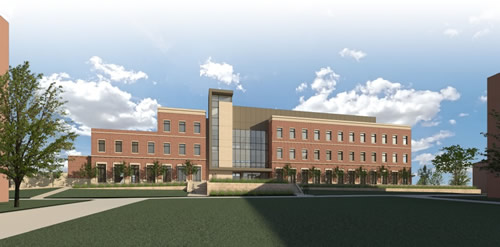
Tarleton State University recently broke for the first building of its planned campus along Chisholm Trail Parkway in Ft. Worth, TX.

At 76,000 square feet, the three-story, multipurpose academic building will enable Tarleton to work with business and industry leaders to expand current degree programs and add new ones, ensuring continued economic growth and development for North Texas.

Projected enrollment at move-in for the first new building is 2,500. Depending on resource availability for additional buildings, the campus could serve 9,000 students by 2030.

In addition to innovative learning areas, common gathering spaces, offices, and a large event area, the first building will include a one-stop shop for student services and a community counseling center offering assistance on a sliding-fee scale.

The Dallas global firm Perkins+Will is the architect and designer, and Holder Construction the builder.
Tarleton State University

Featured

  • UNT Dallas Holds Ribbon-Cutting Ceremony for $100M STEM Building

    The University of North Texas at Dallas in Dallas, Texas, recently celebrated the opening of its new, $100-million STEM Building, according to local news. The ceremony on Dec. 2 preceded the first day of classes in the facility on Jan. 12, 2026.

  • ed tech conference calendar

    Upcoming Awards, Events & Webinars

  • LSU Breaks Ground on $200M Residential Project

    Louisiana State University in Baton Rouge, La., recently broke ground on a new residential complex, according to university news. The South Quad residential project will consist of two buildings and add a total of 1,266 beds for freshmen students. The development comes with a price tag of $200 million, and it’s scheduled to open to students in fall 2027.

  • Different Starting Points, Same End Goal

    Higher education campuses can enhance student experience by implementing mobile credentials to streamline building access, on-campus payments, and access to other amenities. This enables students to connect to their campuses through the technology they use most: their mobile devices.

Digital Edition