Tarleton State University Breaks Ground on New Building

Tarleton State University recently broke for the first building of its planned campus along Chisholm Trail Parkway in Ft. Worth, TX.

At 76,000 square feet, the three-story, multipurpose academic building will enable Tarleton to work with business and industry leaders to expand current degree programs and add new ones, ensuring continued economic growth and development for North Texas.

Projected enrollment at move-in for the first new building is 2,500. Depending on resource availability for additional buildings, the campus could serve 9,000 students by 2030.

In addition to innovative learning areas, common gathering spaces, offices, and a large event area, the first building will include a one-stop shop for student services and a community counseling center offering assistance on a sliding-fee scale.

The Dallas global firm Perkins+Will is the architect and designer, and Holder Construction the builder.
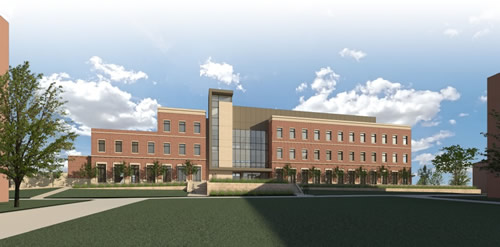
Tarleton State University

Featured

  • sapling sprouting from a cracked stone

    Lessons in Resilience: Disaster Recovery in Our Schools

    Facility managers play a pivotal role in how well a school weathers and recovers from a crisis. Whether it's a hurricane, a flood, a tornado, or a man-made event, preparation determines resilience.

  • Benson Polytechnic High School in Portland, OR

    Preserving Legacy, Designing for the Future

    As historic academic buildings age, institutions face a difficult decision: preserve and adapt or demolish and rebuild. How do we honor the legacy of these spaces while adapting them to meet the needs of modern learners?

  • NWEA Report Recommends K–12 Natural Disaster Recovery Strategies

    The Northwest Evaluation Association (NWEA), a K–12 assessment and research organization, recently announced the release of a new playbook for schools and communities recovering from extreme weather events, according to a news release.

  • Niles West High School Natatorium Renovation

    Natatoriums are highly specialized spaces, and luminaires in this setting face several unique challenges. Perhaps the most significant is corrosion, which is exacerbated by high indoor humidity, condensation, and pool chemicals, often resulting in material degradation in luminaires not certified to perform in corrosive environments.

Digital Edition