University of Richmond Announces New Basketball Facility

The University of Richmond in Richmond, VA, has announced plans for a new basketball training and performance facility. The center will be named after Paul and Anne Marie Queally, two longtime givers and alumni of the university.

Aside from athletic facilities like locker rooms, a practice gym, conditioning areas, and coaching offices, the facility will also provide ADA accessibility to the Milhiser Gymnasium and academic support services to help student-athletes get the most from their college experience.

Construction for the new facility is slated to start in Spring 2019, with a projected fall of 2020 completion date.
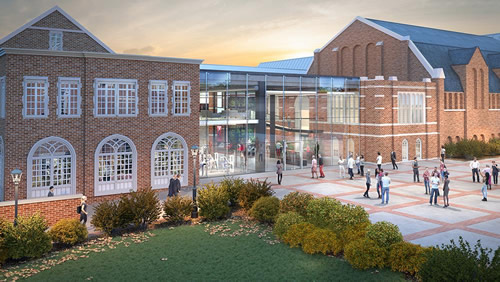
University of Richmond Basketball

Featured

  • concentric silhouettes of a human head

    How Physical Space Shapes the Mind: Designing for Better Learning Outcomes

    Research in environmental psychology and neuroscience increasingly suggests that the way a room is designed can influence memory, focus, or even a student's sense of belonging.

  • Colorado State University Global, SCTE Launch Online Certificate Program

    Colorado State University Global (CSU Global), based in Denver, Colo., recently announced a partnership with CableLabs subsidiary the Society of Cable Telecommunications Engineers (SCTE) to launch an online certificate training program for broadband professionals, according to a news release.

  • ClassVR headsets

    Avantis Education Revamps Hardware for ClassVR Solution

    Avantis Education recently announced the launch of two new headsets for its flagship educational VR/AR solution, ClassVR. According to a news release, the Xcelerate and Xplorer headsets expand the company’s offerings into higher education while continuing to meet the evolving needs of K–12 users.

  • Different Starting Points, Same End Goal

    Higher education campuses can enhance student experience by implementing mobile credentials to streamline building access, on-campus payments, and access to other amenities. This enables students to connect to their campuses through the technology they use most: their mobile devices.

Digital Edition