Wisconsin Middle School Undergoes Renovation and Expansion

Miron Construction Co., Inc., in partnership with Plunkett Raysich Architects, LLP, began construction to renovate and expand the Wisconsin Rapids Area Middle School in Wisconsin Rapids, Wisc .
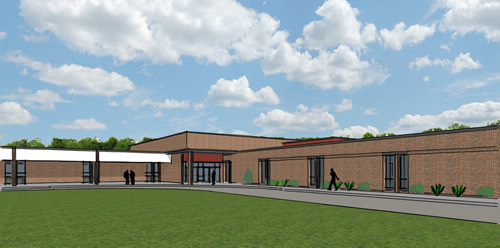
Rapids Area Middle School

Miron’s scope of work on the $7.1 million project includes building a 31,500-square-foot addition for 14 new classrooms, new restrooms, a conference room, four new offices, a gymnasium, and gym storage, as well as a new mechanical mezzanine. The renovation also includes expanding the cafeteria and modifications to the existing locker room.

Work on the project began in October 2017 and is scheduled to be complete in August 2018.

Featured

  • Houston K–12 District Opens New Elementary School

    The Lamar Consolidated Independent School District (Lamar CISD) recently announced the completion of a new elementary school in a western suburb of Houston, Texas, according to a news release. Haygood Elementary School measures in at 110,000 square feet, has the capacity for 854 students, and is the first of three new schools scheduled to be built in the Cross Creek West community.

  • Benson Polytechnic High School in Portland, OR

    Preserving Legacy, Designing for the Future

    As historic academic buildings age, institutions face a difficult decision: preserve and adapt or demolish and rebuild. How do we honor the legacy of these spaces while adapting them to meet the needs of modern learners?

  • UT System Board of Regents Approves $108M Housing Complex

    The University of Texas System Board of Regents recently announced the approval of a new, $108-million housing complex at the University of Texas at El Paso (UTEP), according to a news release. The facility will stand four stories and have a total of 456 new beds for freshmen students.

  • Preparing for the Next Era of Healthcare Education, Innovation

    Across the country, public universities and community colleges are accelerating investments in healthcare education facilities as part of a broader strategy to address workforce shortages, modernize outdated infrastructure, and expand clinical training capacity. These projects, which are often located at the center of campus health and science districts, are no longer limited to traditional classrooms.

Digital Edition