Wisconsin Middle School Undergoes Renovation and Expansion

Miron Construction Co., Inc., in partnership with Plunkett Raysich Architects, LLP, began construction to renovate and expand the Wisconsin Rapids Area Middle School in Wisconsin Rapids, Wisc .
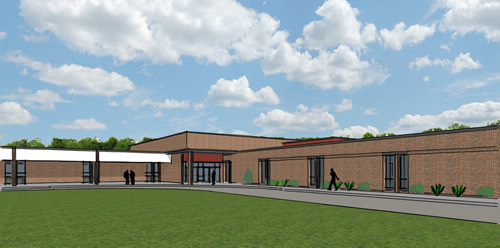
Rapids Area Middle School

Miron’s scope of work on the $7.1 million project includes building a 31,500-square-foot addition for 14 new classrooms, new restrooms, a conference room, four new offices, a gymnasium, and gym storage, as well as a new mechanical mezzanine. The renovation also includes expanding the cafeteria and modifications to the existing locker room.

Work on the project began in October 2017 and is scheduled to be complete in August 2018.

Featured

  • College of the Desert Hits Construction Milestone on New Campus

    College of the Desert recently announced that the construction of its new Palm Springs Campus in Palm Springs, Calif., recently reached a major construction milestone, according to a news release. The college is partnering with general contractor C.W. Driver Companies, which recently “topped out” the facility by placing the final beam in its structure.

  • Chartwells Launches Campus Dining Evaluation Framework

    Contract food-service management provider Chartwells Higher Education recently announced the launch of BLUEPRINT, according to a news release. The evaluation framework was designed to provide a data-driven and customizable roadmap towards optimizing campus dining services and, by extension, the student experience.

  • Agricultural Sciences Complex

    Agricultural Sciences Complex

    Established in 1999, the Education Design Showcase is a vehicle for showing off innovative — yet practical — solutions in planning, design, architecture, and construction. The College of Western Idaho's Agricultural Sciences Complex has been recognized with an EDS 2026 Grand Prize award in the category of New Construction.

  • Pitzer College

    Designing for Change in Higher Ed Learning Environments

    Higher education will continue to evolve, and learning environments must evolve with it. By prioritizing adaptable infrastructure, thoughtful reuse, strong energy performance, and wellness-centered design, campuses can create spaces that support learning today while remaining flexible for the future.