Oregon Elementary School Welcomes Students Back with Renovation

Students at Pilot Butte Elementary School in Bend, Ore., will be seeing the results of the facility’s first major renovation in over 50 years when they return to school. The updated school features a brand-new, security-focused lobby, along with a new renovated gymnasium.

Additional renovations will be taking place as students return to school. This second phase of renovation will result in a new cafeteria, updated ADA-compliant music rooms, and new high-tech science classrooms.
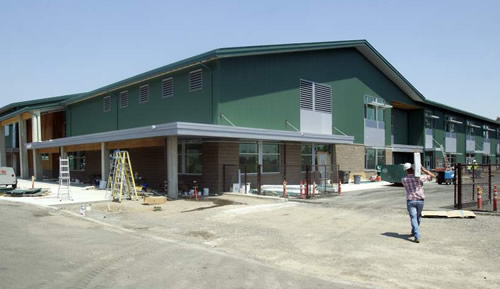
Pilot Butte Elementary School

The renovations at Pilot Butte are only one of multiple projects currently ongoing for the Bend-La Pine School District. All renovations at Pilot Butte are being completed in phases, with the final phase set to wrap up in fall of 2020.

Featured

  • Embry-Riddle Completes Construction on Research, Lab Facility

    Embry-Riddle Aeronautical University (ERAU) in Daytona Beach, Fla., recently announced the end of construction on a new research and lab facility on campus. The Center for Aerospace Engineering II (CAT II) will support aerospace research and technology development and broke ground last summer.

  • Dallas ISD Voters Approve $6.2B Bond Package

    Dallas ISD voters have approved a record-setting $6.2-billion bond package that district leaders say will modernize aging campuses, eliminate portable classrooms and reshape learning environments across one of the nation’s largest school systems.

  • UCF Modernizes College of Hospitality Management

    The University of Central Florida in Orlando, Fla., recently completed a major renovation effort for the Rosen College of Hospitality Management, according to a news release. The project modernized 77,600 square feet worth of academic classrooms, teaching labs, and collaborative spaces to support both students and faculty.

  • Rethinking K-12 Schools as a Continuous Learning Experience

    Most students move through three or more separate facilities during their K-12 journey, yet the built environments they encounter at each stage have traditionally been designed in isolation, with little continuity in spatial language, learning philosophy, or physical resources. Each new school is a reset with different layouts, learning models, expectations, and ways of moving through a building. The next generation of school design is making the case that the first day of kindergarten and the last day of high school can and should feel connected through common support systems and infrastructure in the physical environment.