Boston Public Schools Unveils New STEM Early College Academy

The new $73 million Dearborn STEM 6-12 Early College Academy recently celebrated a ribbon cutting ceremony, and prepares to welcome students for the new school year. The Academy, the first new school construction project for Boston Public Schools in 15 years, is designed to support learning for computer science and engineering, health, and life sciences subjects.
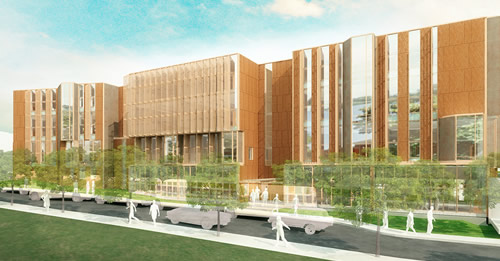
Dearborn STEM Academy

Dearborn features indoor and outdoor learning classrooms, two fabrication labs, a dance studio, 3D printers, and a large media center. The academy will initially serve 488 students, but is designed to accommodate 600 students by 2020. The Dearborn Academy took just over six years to plan, design, and build.

Featured

  • Fargo, N.D., Starts Construction on Consolidated Elementary School

    Fargo Public Schools in Fargo, N.D., recently announced the beginning of construction on a new elementary school, according to a news release. The district partnered with ICON Architectural Group and Kraus-Anderson Construction on the new Horace Mann Elementary School.

  • abstract illustration of school gym

    How the Gymnasium Can Serve as a Model for Learning Space Design

    Multipurpose gyms work because flexibility was built into the brief from the start, not retrofitted later. The same logic applies to academic spaces.

  • Doerr School of Sustainability Accelerator

    From Concrete Warehouse to Innovation Hub: Accelerating Sustainability at Stanford

    The transformation of a once windowless, concrete publishing warehouse into a sun-drenched center for global innovation began with a single, fundamental challenge: how to turn an industrial storage shell into a space built for human connection.

  • Can AI Help Build Stronger Communities in Student Housing?

    Student housing success is shifting from operational performance to student experience, with belonging now at the center. A recent 2025 report underscores a growing emphasis on student well-being, community, and engagement, signaling that expectations now extend beyond logistics to ensure students feel supported in their living environments. AI is enabling that shift by reducing administrative workload and giving teams more time to focus on meaningful student engagement.