University of Iowa Constructing Psychological and Brain Sciences Building

Construction is underway on the campus of the University of Iowa (UI) in Iowa City for a facility that will be the new home of UI’s Department of Psychological and Brain Sciences.
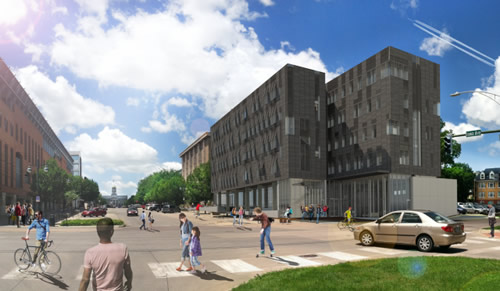
Iowa Brain Science

The new $33.5 million, 66,470-square-foot building will include 70-student and 30-student classrooms that can be combined for use as high-tech TILE (spaces to Transform, Interact, Learn, and Engage) classrooms.

With 15 cutting-edge labs for human research, the building will be better equipped for faculty and graduate and undergraduate students to conduct research. The labs will be clustered by areas of research to promote collaboration and interaction and will, with its new family waiting area, provide a more “welcoming and friendly environment” for parents with children who are waiting to taking part in research projects.

Completion is tentatively set for summer 2019.

Featured

  • blurry image capturing students navigating crowded hallways between classes

    How Human Behavior Data Is Reshaping Campus Facilities Management

    The ebb and flow of students, faculty, and administrators across a campus have a larger impact on maintenance, cleaning, and sustainability than many realize.

  • Illinois District Boosts Security at High-School Stadium

    Richmond-Burton Community High School in Richmond, Ill., recently announced that it has completed the redesigned entrance to its high school stadium with a new focus on school security and community engagement, according to a news release. The district partnered with Wold Architects and Engineers on the project as part of District #157’s year-long facilities master plan.

  • Spaces4Learning Launches 2026 Education Design Showcase Awards

    Spaces4Learning has opened submissions for the 2026 Education Design Showcase! The awards program launched in 1999 with the goal of celebrating innovative, practical solutions in the planning, design, and construction of K–12 and higher-education facilities. EDS recognizes new developments that help achieve optimal learning environments, as well as the architecture firms that brought the ideas to life.

  • Spaces4Learning Trends & Predictions for Educational Facilities in 2026: Part II

    As education leaders look toward 2026, the design of K–12 and higher education facilities is being reshaped by powerful, converging forces. Survey respondents point to the rapid growth of Career and Technical Education, deeper alignment with workforce and industry needs, and the accelerating influence of AI and emerging technologies.