New School Locks Installed at Tennessee Elementary

A 1st grade class in Manchester, Tennessee raised more than $3,000 to install safety locks to classroom doors at New Union Elementary School.
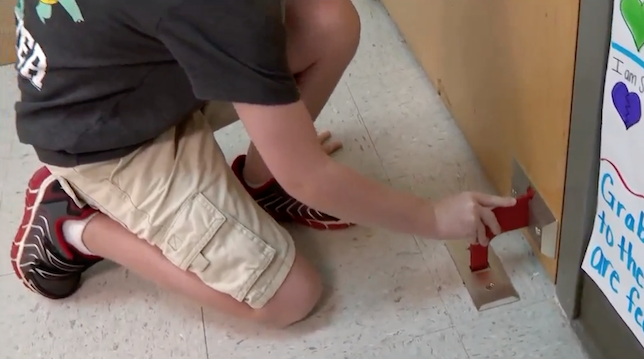
Red metal hooks that can attach to the bottom of the door and bolt it to the ground were installed in nearly 50 doors at the school.

Red metal hooks that can attach to the bottom of the door and bolt it to the ground were installed in nearly 50 doors at the school. The locks are able to secure the room in case of an armed intruder.

The locks were a part of a 1st grade class community service project that focused on school safety. Within two weeks, 48 first-grade students raised the money to purchase the locks with the help of donations from local businesses.

The locks were purchased from Nightlock, a security device company.

About the Author

Yvonne Marquez is senior editor of Spaces4Learning. She can be reached at [email protected].

Featured

  • Fullerton College to Introduce B.S. in Drone and Autonomous Systems

    Fullerton College in Fullerton, Calif., recently launched applications for its new Bachelor of Science in Drone and Autonomous Systems, the first program of its kind on the West Coast, according to a news release.

  • University of Mary Washington Selects Builder for New Theater, Dance Facility

    The University of Mary Washington in Fredericksburg, Va., recently announced that it has selected construction and development firm Skanska to lead a series of renovations and upgrades to fine arts facilities, according to a news release.

  • Q&A: How to Prevent Kitchen Grease Fires in Commercial Kitchens

    School cafeterias and university dining halls serve thousands of meals daily, relying on high-heat equipment like fryers, grills, and ovens. While these operations keep students fed, they also generate significant grease-laden vapors. Without proper controls, this grease becomes a silent fire threat. As a certified exhaust cleaning specialist and business coach who has helped hundreds of institutional facilities achieve NFPA 96 compliance, I emphasize that proactive grease management isn’t optional; it’s a core fire/life safety practice.