Sustainable New Library Opens at Temple University

PHILADELPHIA, PA – A project more than 10 years in the making, the new $135-million Charles Library at Temple University is now open to students. The 220,000 square foot building anticipates over 5 million annual visitors. The building replaces the existing 1960s facility, an outdated building that no longer met the needs of a modern and growing student population.

The building’s base is covered in granite and appears different in color depending on the time of day, creating an evocative mood. Glass is strategically positioned at the three entrances to allow in the natural light and foster a sense of transparency. Visitors are immediately greeted by the expansive three-story atrium lobby that offers views of every floor and corner of the building. Light fills the space from an oculus on the uppermost floor, shining down the cedar-clad dome. A steel main staircase is situated near the information desk.
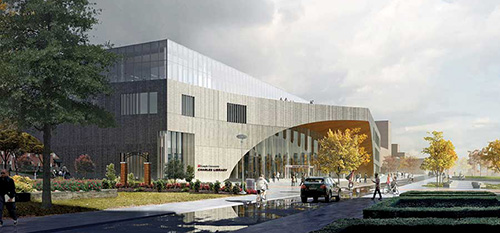
Temple University Library

As part of a $1.2 billion capital improvement program for its Main Campus in North Philadelphia, Temple University commissioned Stantec, as part of a joint venture with Snøhetta, to design the new library. As part of its role as co-designer, Stantec’s responsibilities include architectural documentation, sustainability, project management, and MEP/FP engineering services.

As sustainability lead and LEED consultant, Stantec also designed the building’s green roof, the second largest in the city of Philadelphia. The roof is integrated into the building’s stormwater management system, which is designed to capture rainwater from the campus and manage all rainwater runoff, keeping it from burdening Philadelphia’s aging infrastructure. The building is targeting LEED Gold certification.

Featured

  • Empowering People Through Smart, Sustainable Campuses

    Sustainability is facing increasing scrutiny, with some questioning its costs and priorities. Yet for universities, it remains an essential driver of resilience, operational efficiency and long-term competitiveness. At the same time, there is a growing recognition that sustainable transformation is not just about reducing energy consumption and emissions to comply with tightening regulations ‒ it’s about creating vibrant, comfortable environments where people can thrive, innovate and connect. For university leadership, this is a complex balancing act, with rising energy costs and limited budgets only adding to the challenge.

  • Creating Long-Term Sustainability on College Campuses Through Fair Student Housing

    The quality of student housing can have a significant impact on an individual’s college experience. Today’s higher education institutions face mounting challenges, including declining enrollment, low retention rates between the first and second years, and a rise in student mental health concerns. Thoughtfully designed living spaces can help address these issues by creating environments that promote both academic focus and personal well-being.

  • Pudu Robotics Launches AI-Powered, Large-Scale Floor Sweeper

    Pudu Robotics recently launched the newest member of its MT1 series of robotic floor sweepers, the PUDU MT1 Max, according to a news release. The AI-powered, 3D perception robotic sweeper was designed for use in large, complex cleaning environments both indoors and semi-outdoors, like parking garages and semi-open building atriums.

  • CSU Pueblo Installs Solar-Powered Charging Benches

    Colorado State University Pueblo (CSU Pueblo) recently announced that it has installed four solar-powered charging benches from Bluebolt Outdoor, LLC, according to a news release.

Digital Edition