University of Arkansas Civil Engineering Research Center Breaks Ground

FAYETTEVILLE, AR –Leaders from across Arkansas gathered in early November to celebrate the groundbreaking of the University of Arkansas’ Civil Engineering Research and Education Center at the Arkansas Research and Technology Park. Known as CEREC, the 37,400-square-foot, $13.8-million facility will serve as a research and teaching space for the Department of Civil Engineering and will be a resource for academic, government, and industrial partners across Arkansas.
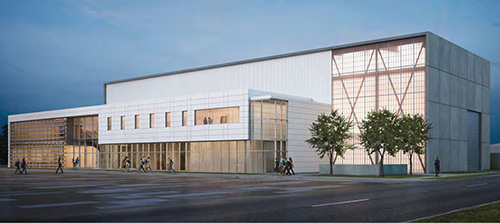
UArkansas Civil Engineering 500

The space includes a high-bay structural testing facility with a four-foot thick “strong-floor” capable of testing large-scale structural systems and components. It will also house a 25-ton rail crane to move heavy materials.

The facility will be the first of its kind in Arkansas. Currently, large-scale structural components must be sent out of state for testing. CEREC will allow academic, industry, and government researchers to conduct cutting-edge experimental research in-state.CEREC will also serve as a living laboratory for several hundred students annually, and the facility has space for 15 faculty members to conduct research.

The project is expected to be complete in spring 2021, with the first classes set to start in the fall of that year.

Featured

  • Abstract tech network data connections with orange, blue glowing dots, lines

    3 Trends for Higher Education to Stay Ahead of in 2026

    As universities enter the new year, the question is no longer whether digital transformation is necessary, but how quickly institutions can convert technological potential into strategic advantage.

  • Beyond Four Walls

    Operable glass walls provide a dynamic solution for educational spaces. They align with today’s evolving teaching methods and adapt to the needs of modern learners. Beyond the functional versatility, movable glass walls offer clean, contemporary aesthetics, slim and unobtrusive profiles, and versatile configurations that cater to the evolving needs of students and educators alike.

  • classroom with crystal ball on top of a desk

    Call for Opinions: Spaces4Learning 2026 Predictions for Educational Facilities

    As 2025 winds to a close, the Spaces4Learning staff is asking its readers—school administrators, architects, engineers, facilities managers, builders, superintendents, designers, vendors, and more—to send us their predictions for educational facilities in 2026.

  • concentric silhouettes of a human head

    How Physical Space Shapes the Mind: Designing for Better Learning Outcomes

    Research in environmental psychology and neuroscience increasingly suggests that the way a room is designed can influence memory, focus, or even a student's sense of belonging.

Digital Edition