Memphis STEM School Taking Over as Shopping Center Anchor Tenant
- By Dian Schaffhauser
- 12/05/19
A year from now a half-abandoned shopping center in Memphis will be adding a STEM school as its anchor tenant. A $15 million project will convert much of the currently-named Frayser Plaza into Harmony Plaza, hosting the Memphis STEM Academy (MSA) for elementary students. Currently, MSA covers grades K-3 with 230 students; the newly expanded space will accommodate expanded enrollment of 450 for students in grades K-5. The new school site is expected to be ready for fall 2020.
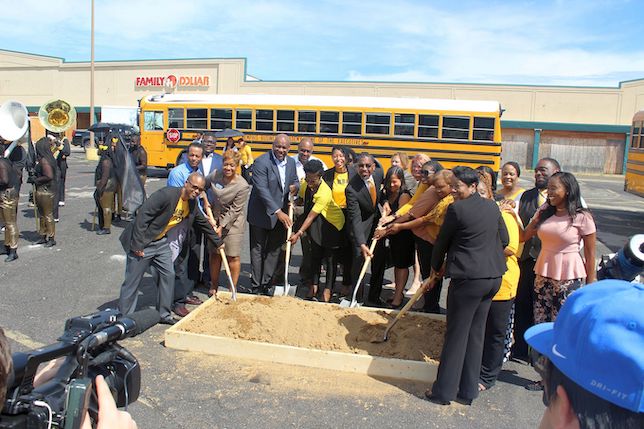
According to the Memphis Business Academy (MBA), which runs the school, the redevelopment will include new classrooms, STEM labs, a multipurpose room, a library and offices. Forty-percent of the building will continue hosting the retail operations that currently occupy the space.
MSA launched in August 2016 in a rental space with students in kindergarten and first grade. Since then it has continued adding new grade levels with subsequent school years. Learning emphasizes project- and problem-based learning, using curricula provided by Project Lead the Way, Engineering is Elementary, ScratchJr and LEGO Education.
According to local news coverage, this is the second time that MBA has retrofitted a shopping center. Previously, MBA worked with the Shopping Center Group to convert a closed Kmart into the charter school operator's main campus. MBA is the sponsor of six schools in the city, each authorized by the Shelby County Schools Board of Education.
"Renovating this plaza removes another eyesore and offers an asset that any community would be proud of — a new high tech school for elementary children, a healthcare partnership that will be a blessing for Frayser families and retail values that are competitive with any Memphis community," said the Anthony Anderson, CEO of MBA, in a statement.
The renovation is being funded through a federal New Markets Tax Credits, which are intended to finance major redevelopment in high-distress areas. Participants in the deal include Hope Credit Union, SunTrust Community Capital, BlueHub Capital and Nonprofit Finance Fund.
About the Author
Dian Schaffhauser is a former senior contributing editor for 1105 Media's education publications THE Journal, Campus Technology and Spaces4Learning.