University of Tennessee: University Center Bridge

When the University of Tennessee in Knoxville (UT) began upgrades on the university center — including a new student union and outdoor plaza — it was vital that the space be aesthetically pleasing while addressing the stormwater drainage issues that had plagued the campus for decades. The new Student Union project is organized around major circulation routes into and through the campus.
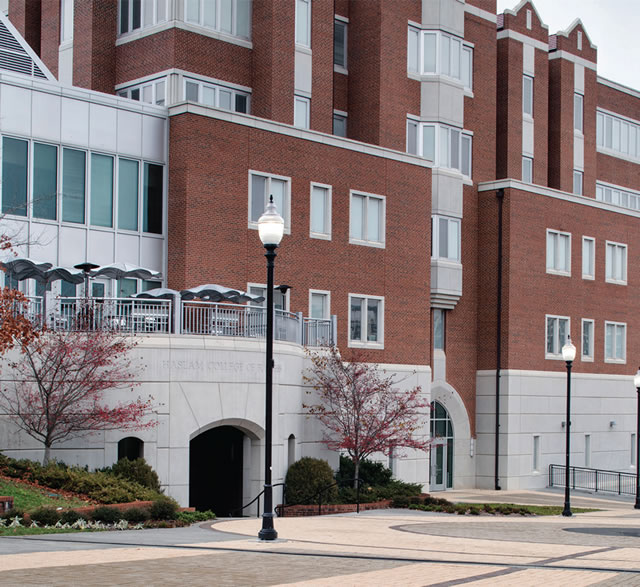
University of Tennessee

Photos courtesy of Belgard

“Our campus is close to the Tennessee River, so we have to mitigate stormwater runoff before it gets to the river,” Dan Smith, P.E., project manager at UT told the Interlocking Concrete Pavement Institute. To accomplish this, the university and project team installed permeable pavers manufactured by Belgard.

The project, dubbed the University Center Bridge, features an eco-friendly, durable concrete paver that reduces water runoff. The Bridge connects the campus classrooms on “The Hill” with the library and UT’s Neyland Football Stadium, creating a picturesque scene.
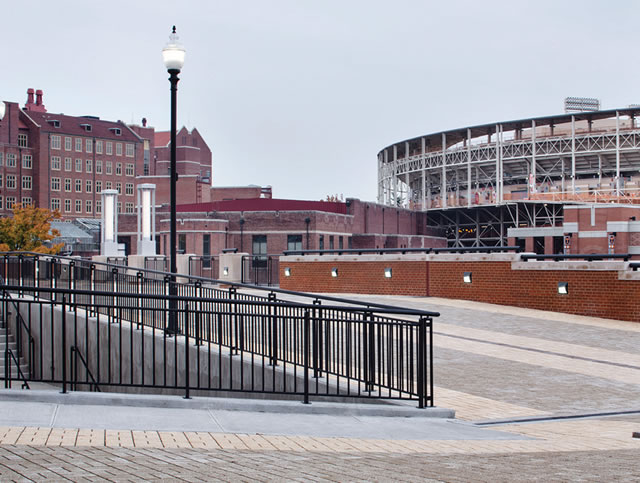
University of Tennessee

Naturally, the new Student Union complex is a high-traffic area when class is in session and on game days, while also acting as a special events space for gatherings, including live broadcasts. The University Center Bridge creates a strong visual connection between the east and west sides of the campus, using a basket-weave paver pattern that blends design, craftmanship and functionality. In fact, the permeable surface of the new installation enabled the university’s compliance with local stormwater regulations.
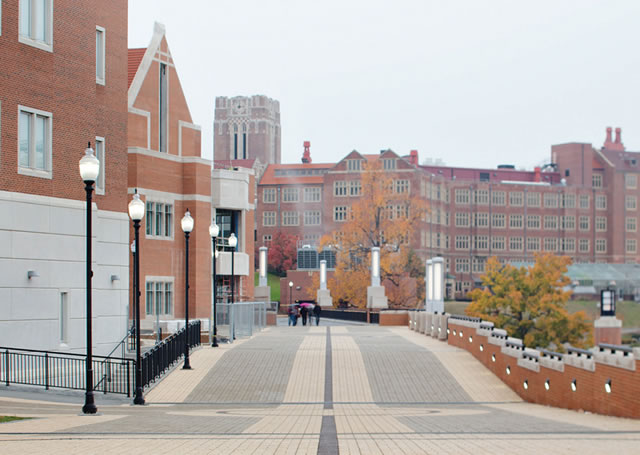
University of Tennessee

Completed in 2017, McCarty Holsaple McCarty Architects & BarberMcMurry Architects teamed up on the design of the project. Rentenbach Constructors, Inc. was the general contractor, and Belgard Master Craftsman, Hickory Hardscapes completed the installation.
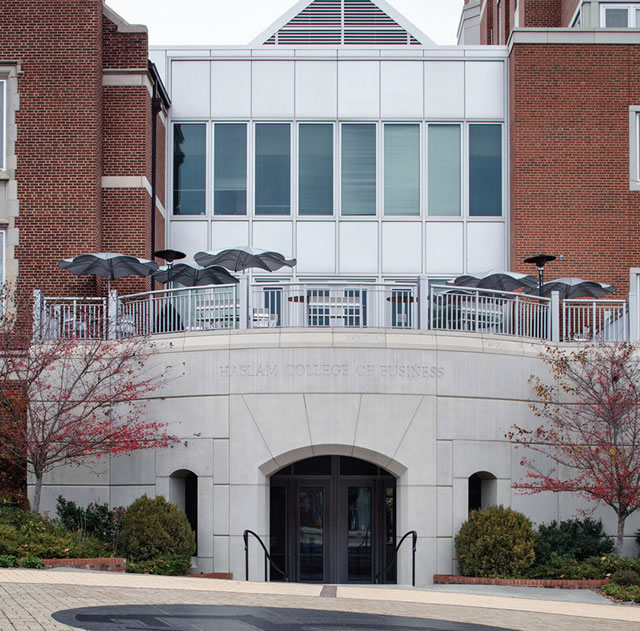
University of Tennessee

This article originally appeared in the January/February 2020 issue of Spaces4Learning.

Featured

  • Spaces4Learning Trends & Predictions for Educational Facilities in 2026: Part II

    As education leaders look toward 2026, the design of K–12 and higher education facilities is being reshaped by powerful, converging forces. Survey respondents point to the rapid growth of Career and Technical Education, deeper alignment with workforce and industry needs, and the accelerating influence of AI and emerging technologies.

  • sapling sprouting from a cracked stone

    Lessons in Resilience: Disaster Recovery in Our Schools

    Facility managers play a pivotal role in how well a school weathers and recovers from a crisis. Whether it's a hurricane, a flood, a tornado, or a man-made event, preparation determines resilience.

  • UNL Kiewit Hall

    Designing for Engineering Excellence: Integrating Sustainability and Wellness at UNLs Kiewit Hall

    Kiewit Hall at the University of Nebraska-Lincoln exemplifies how academic institutions can integrate sustainability and wellness into modern learning environments. With an integrated and collaborative team approach, Kiewit Hall addresses enhanced learning and creativity, physical health, and mental wellness, and fosters a sense of community through innovative design, operations, and policy solutions.

  • Illinois State University Breaks Ground on College of Fine Arts Transformation

    Illinois State University in Normal, Ill., recently held a groundbreaking ceremony for the Wonsook Kim College of Fine Arts transformation project, according to university news. The series of new constructions and renovations will upgrade spaces in Centennial East, the Center for the Visual Arts, and the Center for the Performing Arts, as well as replace the existing Centennial West facility with a new Commons Building.

Digital Edition